Keynoting SAOIM 9 June 2016

blogjune

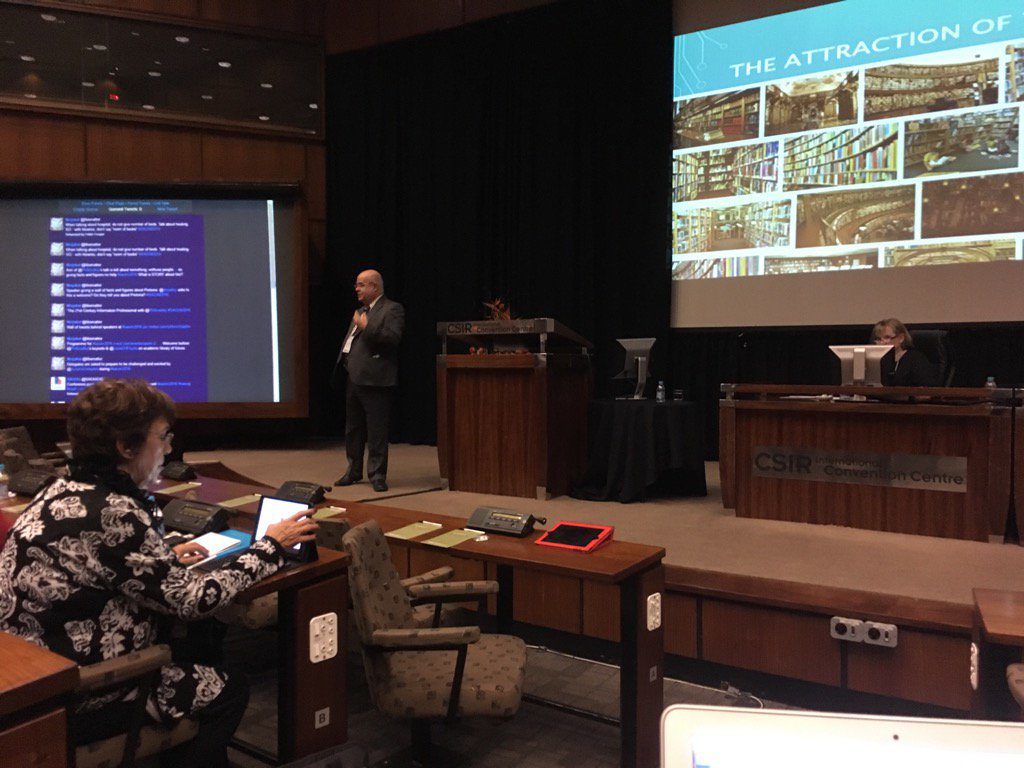
Had a great keynoting session, talking about how to maintain enthusiasm and make sense of new ideas from a conference once one gets back to the library. Ironically, I am a little brain-dead after this, so do not have a lot of energy to blog a lot today.

I riffed on Mitchell Whitelaw’s idea of “generous interfaces” from the article below, speculating that we maybe can focus on generosity as a way to share what we are learning, so that knowledge and networks are strengthened in the profession.

Whitelaw, M. (2015). Generous Interfaces for Digital Cultural Collections, 9(1). Retrieved from http://www.digitalhumanities.org/dhq/vol/9/1/000205/000205.html.

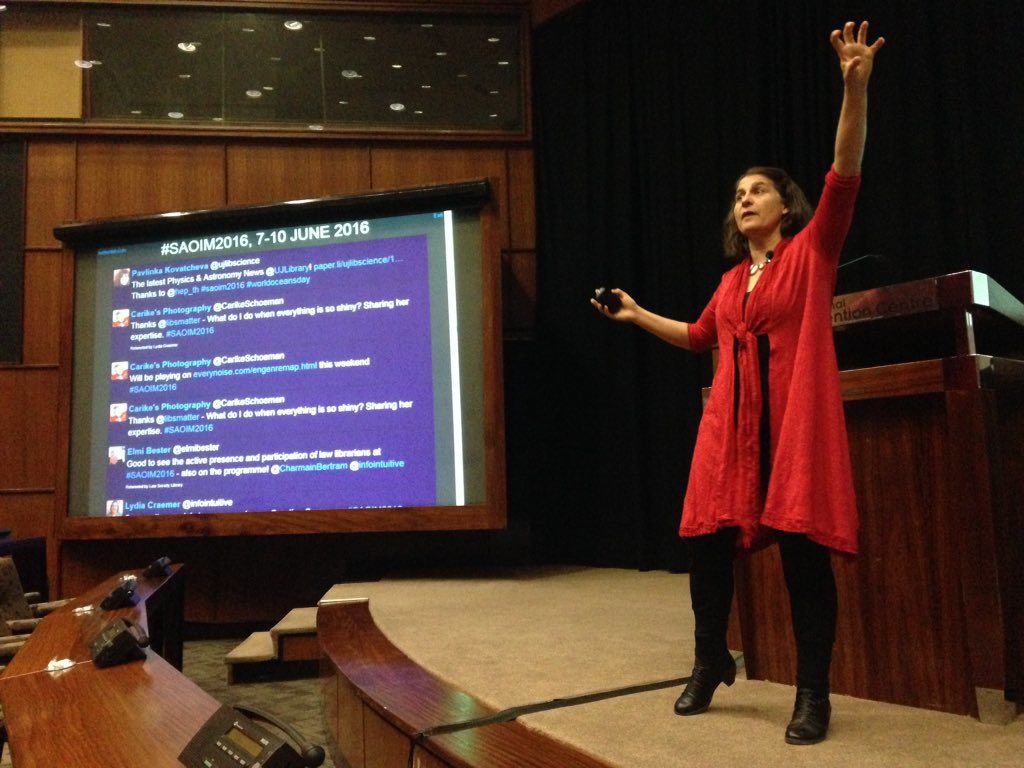
The photo below was posted by Pavlinka Kovatcheva .  I would like to say that it is a totally atypical pose for me. But can’t. Rachel and several others will be impressed, however, that my hands are actually in focus and not a blur.


Knoting

SAOIM 2016 Day One : Let’s define what we do, so we know what to do next

blogjune

First day at the Southern African Online Information Meeting 2016.

The theme I am seeing is that we need to define (or redefine) exactly what we do. What is our core purpose? Do the day to day operations in our libraries support this overall purpose or do we need to stop doing something ?

Phil Bradley made the point that what we do is not about physical books. We need to be careful not to fall for the “attraction of the artefact”. Our physical stock is used to define us in the dictionary, but collection management should not be what we are about. We can change the conversation to talk about building the library community rather than building the library collection. He gave a lovely example of what I have heard someone (who?? not me) refer to as “libraries as engines of hope and kindness”. The respect shown by a prison librarian gave clients a sense of belonging, and that was extended when on release the prison librarian had arranged for use of the local library. Phil  suggested that being a librarian is a position of privilege and power because we can make such an impact on peoples’ lives.

ArtefactPhil

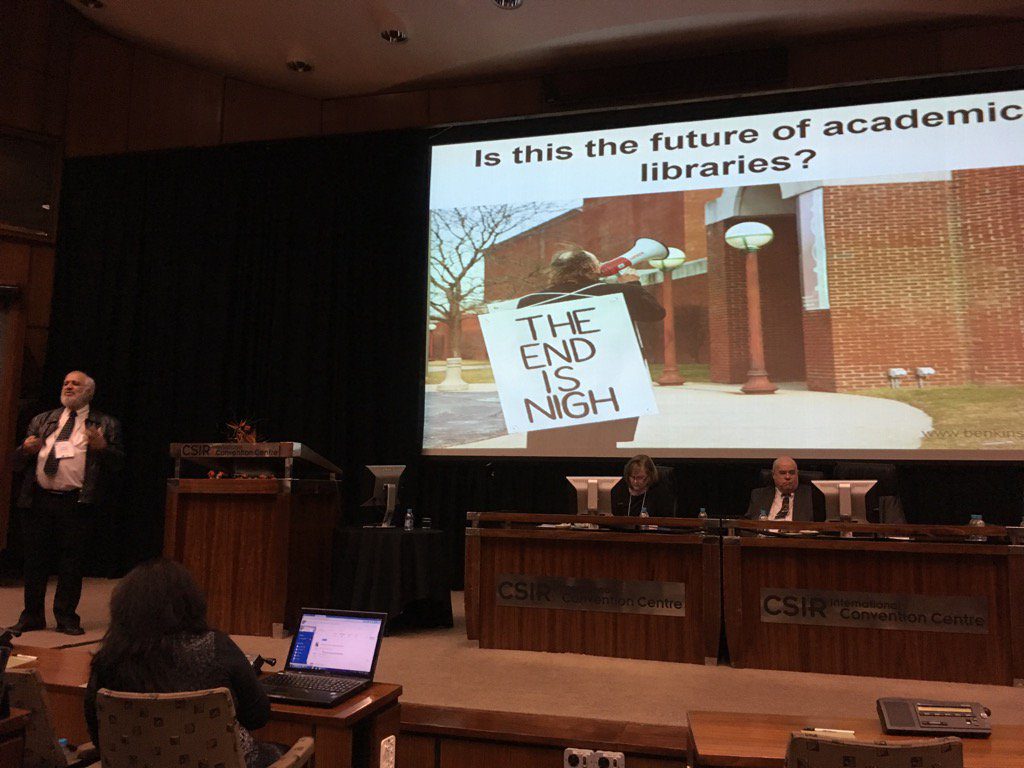
Louis Fourie (after an initial diversion about keynotes being flashers and strippers, leaving me wonder which I will show myself to be) outlined challenges and developments on the horizon, and suggested ways that academic libraries could develop their services. Although libraries originated in a time of scarcity of information, with the current deluge, they may be better suited to positioning themselves as a friendly node in the network for students, rather than a source of content. Although I am all for microchipping our brains for better interfaces with machines, I am not 100% convinced that teleporting librarians are in our futures. I do agree with him that, whatever the future looks like, we do need to redesign what we do.

EndIsNighFourie

In corollary to Phil, Greg Lambert made the point that what we do is not about physical space. I liked his comment that there are few other professions (maybe with pharmacists as an exception) where the person is named after the space. His suggested solutions were that we need to 1) get out of our spaces, 2) listen and observe (to position ourselves to help our clients) 3) solve problems – our clients’ problems not our own 4) expand our reach.

These were the three keynote/invited speakers. The rest of the conference is a single session, mixing local speakers with one or two talks from sponsors. Unlike the multi-track conferences I am used to, this makes sure that all delegates are part of the same conversation. The Twitter feed is even on the screen behind the main speaker so all delegates can be part of that conversation too. I am used to there being a couple of Twitter feeds coming out from concurrent sessions and simultaneously being part of those conversations while sitting in my session. This is much more relaxed.

Siphethile Gcukumana outlined the research that led to this survey of online tools used by researchers worldwide:

Kramer, B., & Bosman, J. (2016). Innovations in scholarly communication – global survey on research tool usage. F1000Research, 5, 692. http://doi.org/http://dx.doi.org/10.12688/f1000research.8414.1


Have a play with the survey data here at SILK, where you can see the 6 research stages, 101 tools and 17 processes that were examined: http://dashboard101innovations.silk.co/ .


I cannot outline all the talks that we heard due to space, but all the sessions were very very interesting. You can see the programme here. Some snippets …
  • One speaker outlined how she used the Excel tricks I have taught my students for the first time this year and stressed the need to keep a transaction log so you remember how you processed the data. I wish I could have bottled this to show my students how relevant and useful these skills are professionally.
  • South African copyright law has a concept of “private use”, so if you are just using something for yourself, and not making money from it, copyright laws are far less strict than in Australia.
  • Twitchats are useful Professional Development, and Australians seem to be playing lots in this space.
  • AustLII is actually part of a worldwide Legal Information Institutes Free Access to Law movement. These are  “not-for-profit group[s] that believes everyone should be able to read and understand the laws that govern them, without cost”.  Sounds like the South African version has a higher public profile than in Australia.
  • Some librarians will probably grow up to be Competitive Information Analysts and could easily make the transition. Not just providing information requested but value adding to provide insight to the data. Lovely argument for us to include data visualisation in our course.
  • South Africans are also talking about the semantic web and scratching their heads about skills needed to integrate our resources into freer access and linking for anyone who might want to use our information.


PD when a small person is overwhelming your life

blogjune

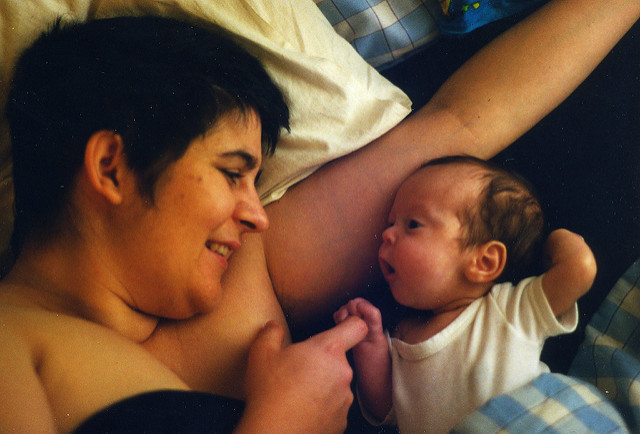
Molly asked on Twitter this morning how people who had small kids kept up with professional development, triggered by her post about being so tired caring for a small baby that it is hard to keep up, It’s all a bit hard right now.

Been there. I waited until my first child was sleeping through the night before we had our second. My children are five years apart…

Mumandbub

My dirty little secret is that, instead of having any kind of professional development plan, I just hung out on the net and played .. BUT it turned out to be the best tech strategy I could have had.

Totally ignoring libraryland, I did two things that actually made me a very useful tech user for libraries when I came back to work.

The first was to be part of the “Fabulous February Mommies” group on ParentsPlace over at InfoVillage. This was a bulletin board for ALL mums worldwide who were expecting babies in February 1998. Plus were on the internet . And able to navigate and understand daily postings. There were maybe 30 of us. 30!!! Through my involvement in this community I understood how to “do” social networking – the asynchronous posting; finding a voice that both felt like me and suited the site and the purpose; not freaking out as the group “formed, stormed and normed” over the issue of how to get a baby to sleep through the night.

At that time it was so weird to have friends that you only knew on the internet – let alone supportive and wise friends who filled a place in your life that real life ones could not – that I simply could not discuss this part of my life with people offline. Yet, when social media really made leeway I already knew how to dive in and swim the waters. I was years ahead of people who had been studiously “professionally developing” by learning the advanced search screens of vendor-sold database products, which is what I guiltily felt I really should be doing if I took my profession seriously.

The second thing I did was to play the Sims.  A lot. I found out how to navigate within a 3D world with a mouse, how to control camera angles to see different parts of a 3D world, what an inventory was, how to build … SO… back at work along comes Second Life into libraryland… or libraryland went into Second Life. Whichever way it was,  my idle and ill-spent mummy-brained hours when the baby was feeding actually gave me a literacy that allowed me to get up to speed faster than almost any other activity could have.

This was serendipity, I know … but what I am trying to say is that what you do while you are having a career break may not matter as much as you think it does. It may be that what you are doing is giving you far greater skills and literacy for some of what is to come than if you stayed in a workplace and relied on training hours to get you all trained up. It could be that following your passion or just doing what you can to put one fuzzy-brained foot in front of the other (to mix metaphors) is exactly the best thing to do to give you an edge when you are ready to jump back into librarianing.

I don’t have a fridge for my ostrich…

blogjune

Not a dilemma that I ever thought I would have.

I’m a reformed vegetarian.

I elected to have a “white meat only’ diet when I was in college and was in a relationship with a vegetarian for over 20 years. My children are vegetarian. I am only just learning to cook meat and really have issues with anything that is a little like entrails or resembles too much something that was once alive rather than looking more like a lump of tofu.


So I thought.


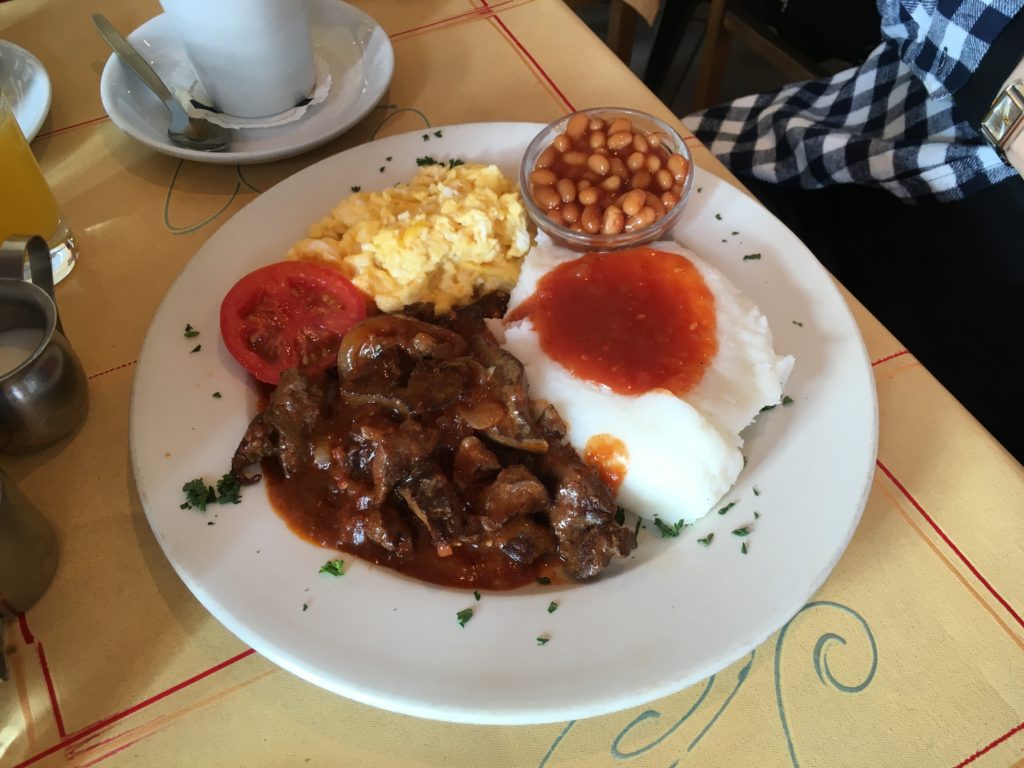
Yesterday I ate ox liver.


2016-06-05 08.49.54

Today I ate at a restaurant that had told our host that it guaranteed at least two South African dishes.

This one I spotted immediately:


 OSTRICH FILLET:
Red wine and black pepper marinated ostrich fillet served with butternut fondant. Grilled brown mushrooms, marinated beetroot, and creme de cassis jus.


However I did not immediately spot the South African animal in the one below. It is a little like the Monty Python “Crunchy Frog” Sketch, where the lark’s vomit was in the very fine print… I don’t know about you, but I don’t immediately associate Umbria with Springbok…


UMBRIAN DELIGHT:
     Marinated Aubergine and black mushroom layered with grilled peppers, springbok carpaccio, parmesan & rocket, topped with basil pesto and pine kernels  *contains nuts


So, I ordered the ostrich fillet, but of course without the beetroot, because one really needs to draw the line at something that creates evil purple ooze.


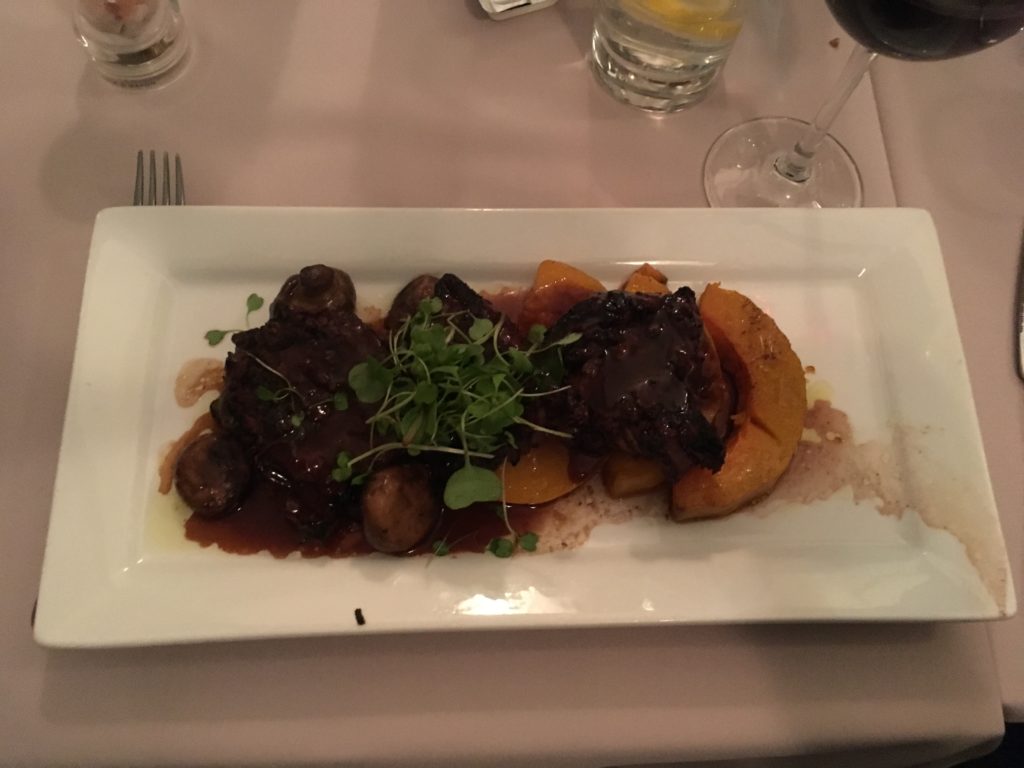
 2016-06-06 21.05.47

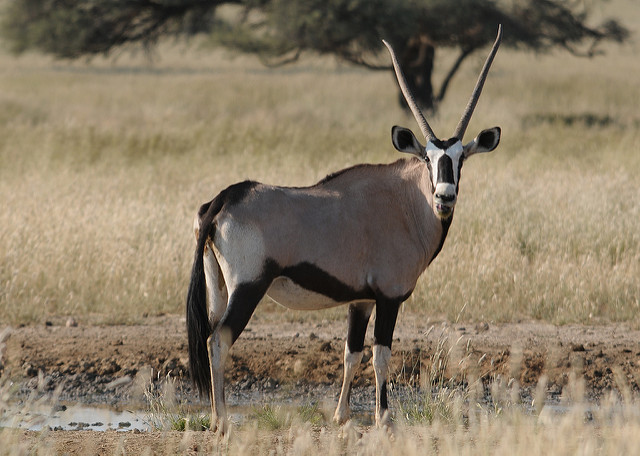
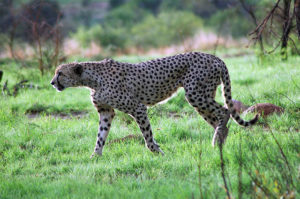
The special, which was not on the menu, was a piece of gemsbok. Yes, something that looks like this in the wild. (Something I had not seen on photo-safari yesterday, so somehow more acceptable to be eating..).


 Gembok


Greg ordered this and I agree with his judgment that it was amazingly tender meat. The texture was like the difference between a rough clay pot of a steak compared to a very fine porcelain. I am sure that it was not flavoured with lavender, but it certainly seemed to be, or some kind of sage. Yes, one of the most delicious meats I have eaten in my life.


The ostrich? OK. Bland. Beautifully cooked and flavoured with a lovely sweet sauce. If you can imagine a chop or steak where there was all texture but not taste, but not in an unpleasant way, then you would get an idea. Certainly it did not taste like a large chicken or turkey.


Anyhow, it seems to be customary in South Africa for dishes, where there is more than a certain proportion left over, to be presented in a leftovers container on leaving. So – here I am at 11:45pm at night, leftover container in hand, in a hotel room without a fridge, wondering where I should put my ostrich.

Mzansi Libraries Online

blogjune

Yesterday I went on a photo safari in Pilanesberg National Park and saw an amazing number of African animals as we drove through the park – rhinos, elephants, wilderbeest, springbok, a hare, zebras, a giraffe and many more. My hosts, Charmaine who is on the SAOIM committee and her 6 year old daughter,  were the best guides I could have had. Photos forthcoming when uploaded. (I am so excited by the shots I took that I think I could easily post a photo a day for the rest of #blogjune and not bore anyone).

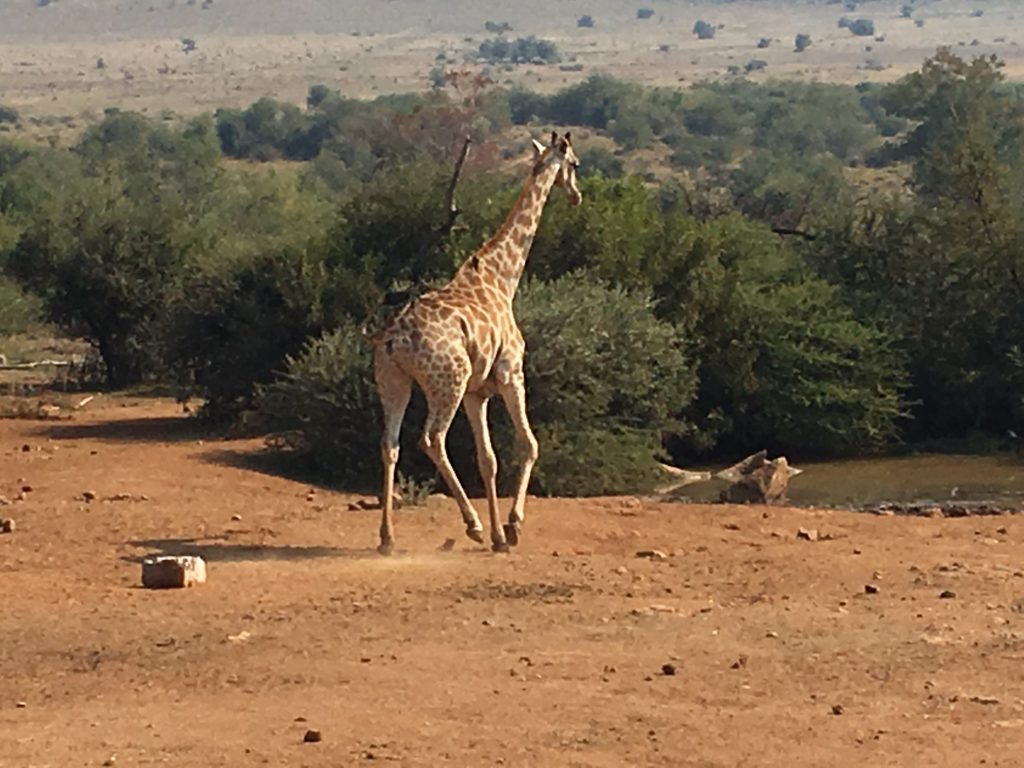
I was using Charmaine’s fabulous Nikon, so I do not have any of the images yet… I took about 5 photos with my iPhone, so here is a very ordinary one of a giraffe.. (In the wild. In Africa! OMG!!!)

giraffe

The trip was equivalent to arriving in Perth at 5am and then being in Margaret River by 10:30am. During the drive, Charmaine filled me in beautifully on libraries and librarianship in South Africa. She mentioned the funding the country had received from the Bill and Melinda Gates foundation, aimed at improving public libraries in South Africa.  Part of this is a programme to refurbish 27 libraries and provide them with ICT equipment to allow free access to the internet as part of the Mzansi Libraries Online project. (Another project is to provide access to over 600 “online libraries”).

The list of equipment that was planned for supply to each library in the pilot project is impressive. There is a focus on disability access in each library.

” Each library will receive equipment estimated at R470 000. The equipment will include a variation of the following lists determined in order of priority and based on the needs identified by the respective library and/or provincial library authority: 20 computers (10 public, 3 games, 2 visually impaired and 5 office); 2 printers; 1 document scanner; software; 10 Tablets; 10 e-Readers; gaming room set up, including 3 computers, 3 X-Box console kits, 2 Play stations and gaming headsets”.

What really struck me, however, is the way that the purpose of the project reinforces my personal biases and core beliefs about what libraries are really about:

” It is to position the public libraries as agents of democracy through nation-building and centres for development to be used for the improvement of the citizens’ quality of life through access to information”.

How to keep up with blogjune by adding all feeds to feedly

blogjune

The wonderful Peta has put together three files of RSS feeds for #blogjune blogs, that can be imported into an RSS reader.

I have combined these into one file available here: https://www.dropbox.com/s/ma7o2rq8rygce2d/BlogJune2016PetasFeeds.opml?dl=0 .

What do you do with it?

  1. Download the file and make sure that it is saved as “BlogJune2016PetasFeeds.opml“. Sometimes it will automatically open in a text reader and will have a .txt extension if you do not check it. If it opens as text in your web browser, then copy the lot and manually paste it into a text file and save it with the right name.
  2. Go to Feedly RSS reader and get an account. Download the app if you are inclined to.
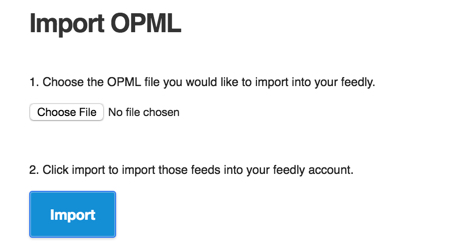
  3. Scroll down to find the button that says “Add content”. For some pages there will be a tiny list of links at the bottom. You should click on “Import OPML” in this case.
  4. You will see a screen that looks like this:
  5. FeedlyOPML
  6. Choose and upload the file
  7. You will see a list of blogs in the left hand side of the screen. You can display these in several different ways by changing preferences, from list of one line per entry to magazine style with pretty pictures.

Enjoy. Go forth and read and comment 🙂

Nervous Nelly and being Intrepid.

blogjune

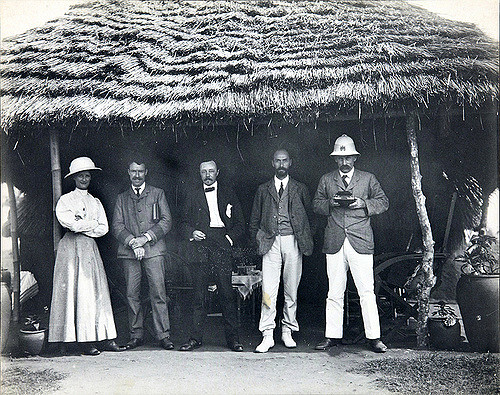
I’ve always loved stories of intrepid women who went from England or Australia to places like India or Africa in the 1900’s or 1930’s. Brave women in big hats with long skirts and field glasses and a steely, determined chin who said things like “fiddlesticks!” when confronted by an elephant far closer to her mosquito net than was comfortable.

english abroad

With all the risks in that kind of travel – typhoid and malaria, residents who did not agree that white people should trample their country, probably a lack of women’s loos –  I wonder whether I would have ventured further than my front door if I had the same opportunity.

Tomorrow I’m going to Africa for the first time and my inner Nervous Nelly is carrying on like some turn-of-the-century pale-faced debutante. All fainting and smelling salts.

The Department of Foreign Affairs and Trade travel advice for South Africa puts it at Level 2 “Exercise a high degree of caution”. This is currently the same advice as for Belgium where the National Terrorism Threat Level is Level 3 of 4, indicating that a serious and credible threat exists. In South Africa the caution is due to the high level of crime, rather than risk of terrorism.

My university, when giving me permission to travel, required me to fill in a “DFAT 3” form, which asks me to list security precautions due to our corporate travel advisory company having a high risk rating for the country. I had to demonstrate that someone at the conference knew my movements, I had a known roaming phone number, that I was staying at accommodation of a particular star rating and that I had a transfer from the airport to my accommodation. I have been sent warnings about what to do if I am mugged. I have been advised not to use ATMs in public, or to show my phone obviously in the street. And if I travel in a car to make sure the doors are locked and the valuables are in the boot.

I am sure all will be OK. If those women in the 1930’s could do it in long skirts, then I am sure that me and my iPhone will be just fine.


Southern African Online Information Meeting

blogjune

Sorry about the teaser yesterday 🙂 I had just been walking around the house saying “I’m going to Africa on Sunday” because it felt so bizarre to say… and it spilled into my blog.

I have been invited to keynote the 13th International Southern African Online Information Meeting in Pretoria next Thursday.  I am then presenting a workshop on the Friday.

SAOIMImage

I suspect that the lovely Michael Stephens of Tame the Web had something to do with the invitation, having talked there a couple of years ago – so thanks very much, Michael.

I am very excited to be meeting Phil Bradley for the first time, as I have watched his ongoing commentary on the changing face of online search with interest.

While it is very nice to be invited to find my own topic. it can be really hard to find something that is both unique and likely to be interesting to others. I ended up going with the keynote that I always wanted to see at library tech conferences, but ends up more likely to be a chat over morning tea in the exhibition hall. So often there are amazing, stimulating, inspiring ideas at these types of events… but by Day Two my brain is full and I am feeling rather overwhelmed and not quite sure how the really, really interesting dazzling new ideas will stay with me when I return to the office.

So, here is a summary of the keynote:

What do I do when EVERYTHING is so shiny? Personal strategies for coping with new technologies
At library technology conferences, delegates learn a lot and see inspiring speakers doing clever projects with exciting technologies … and possibly return to their workplaces a little overwhelmed and unsure how to relate this to their day-to-day practice. Factors like mountains of email, budgetary restrictions, an inflexible work environment and lack of time for training can make exciting new shiny technology projects seem aspirational rather than achievable. From a library-school educator’s perspective, leaving a conference feeling more able to use new technologies may be linked to skills and actions that are not technology-based at all. A hidden rule book, defining a core purpose, hacker ethics, produsage, skunkworks and generosity may be some surprisingly effective non-tech tools that improve your ability to make an impact with technology. 

And.. they also asked me to prepare a three hour workshop, so I went with something that would explore and expand the themes of the keynote:

Futures dreaming and finding a personal technology strategy
With so many technological options and so much operational change possible in our information services, just what will they look like by 2026 ? What focus can an information professional take now to stay calm, competent and effective as they navigate these changes?

This workshop will focus on facilitated activities to answer a number of questions designed to tease out possible futures, such “what would you do in your information service if you had all the time, money and skills you needed?”. Participants will be encouraged to share their wisdom and their questions with each other so that the group can create together alternative pictures of information services in 2026. Each participant will also work toward their own personal strategy for assessing, implementing and coping with new technologies to benefit their clients and information services. Participants should leave with some ideas they can implement today to cope better with a technological future of tomorrow

What to blog about for blogjune?

blogjune

So, you’ve dusted off your blog again for blogjune 2016; or created a nice, shiny new blog ready to join in the conversation. What are you going to post about?

Here’s my tips about feeding the hungry blog-beast.

baggyjumper. (2011). Hungry! Retrieved from https://www.flickr.com/photos/baggyjumper/5462303212/

baggyjumper. (2011). Hungry! Retrieved from https://www.flickr.com/photos/baggyjumper/5462303212/

  1. Flesh out those half-baked bigger ideas
    • You probably have three half or fully-baked ideas from the last year that you know you would like to flesh out into fully-fledged big topic posts. Maybe a really cool project you did at work. Or a speculation about copyright, user service, drones in Maker Spaces… whatever floats your boat… Promise yourself that by the end of June you will have these published and work on them bit by bit over the month. It may not be until the end of the month that they are done, but you don’t have to get them completely finished in one night.
  2. Pick two or three other bloggers on the #blogjune 2016 list. Read whatever they write and craft a response. If they write silly short stuff, all the better. Follow on in the same vein.
  3. Take a pic of your workspace and tag the post with #blogjune #workspace
  4. Start a distributed poem. Write the first line, pick another blogger on the #blogjune 2016 list ,tag them by mentioning their blog URL in your post and challenge them to write the next line and pass it on.
  5. Recipe. Recipes never go astray.
  6. Write 5 Things About Me
  7. Write 5 Things I wish I learned at Library School
  8. Write These strange 5 tips about working in a library will astound you
  9. Open a Soundcloud account and record a two minute audio piece to embed in your blog. One minute to create profile, two minutes to record, one minute to embed in blog post. Publish! Under 5 minutes
  10. Commit to a single week where each post is just one single sentence and no more. #blogjune #brevity
  11. Write a post called “What to blog about for blogjune?”