Gratitude and trauma in archives. Blogjune. 8/21

blogjune

When you know your work will involve re-traumatising already traumatised people, how do you create and hold a space of support and respect, without becoming so personally impacted that you stop being effective?

This last week of my foundations for information management course focuses on what it means to bring your whole self to work. It looks at work done by librarians, records managers and archivists where dealing well with emotions and personal histories (our own and others’) make a big difference to how well we do our job.

https://upload.wikimedia.org/wikipedia/commons/9/9e/Kamloops-indian-residential-school-1930_%28cropped%29.png
https://commons.wikimedia.org/wiki/File:Kamloops-indian-residential-school-1930_(cropped).png

This morning my class was very lucky to have the generous Genevieve Weber deliver a Zoom session about gratitude in the archives, based on her 2019 discussion of the attitudes and practices she has adapted as Assistant Head of Archives at the Royal British Columbia Museum, working with Indigenous records. Rituals of thanksgiving.

Well, that is what we had planned for her to talk about.

Instead of working on the presentation to my class in the last couple of weeks, as she had planned, she had been working with other archivists across Canada. They were putting together an archival jigsaw, providing as much information as possible to descendants and survivors of the Kamloops Residential School in BC, where unmarked graves of over 200 children were confirmed about a fortnight ago. Genevieve had described working with these records as part of the 2019 pre-reading I had students do for her session.

I do not think my class missed out in any way. Genevieve brought her whole self. Embodying adaptability while acknowledging setback, she gave a presentation that she had given a couple of weeks previously at the Society of California Archivists AGM 2021. She was straightforward and respectful about the work she was doing, neither hiding the difficulty, nor describing it in heightened detail. She mentioned joyfulness, something certainly not taught in the classroom when I went through library school.

A picture of the research room with an engrossed family reading records of their ancestors. “See, see how many are at the table. Usually there is just one person allowed per table. And they have their backs to the staff member sitting at the desk, also not usually allowed. And that hat. There was a history of material being stolen across the country by people, taking it out in their hats and coats, so usually no hats… and that guy, that one there… he discovered a tape of his dad’s voice, headset on he shouted across the room “I can hear him, I can hear him””.

If you want to think more about Genevieve’s ideas of gratitude, I would recommend the article below.

Weber, G. (2019). Gratitude in the archives. Garland Magazine. https://garlandmag.com/article/gratitude-in-the-archives/

For an indigenous voice about the complexity and emotion of discovering generational trauma in historical records, I would recommend:

Shiosaki, E. (2020). Friday essay: ‘I am anxious to have my children home’: recovering letters of love written for Noongar children. The Conversation. http://theconversation.com/friday-essay-i-am-anxious-to-have-my-children-home-recovering-letters-of-love-written-for-noongar-children-127809
Words and marathons. Blogjune 5/21

blogjune

Around 120 000 words or more. That is what I have written about libraries, records and archives in the last 26 week marathon. So, while more blogjune posts will be about that, I am waiting a while for the well to refill.

I have been responsible for course material for three 10-week postgraduate courses, delivering one in Study Period One, a two week break, then two in Study Period Two. I totally rewrote one, 85% rewrote another and shuffled and edited the third, but only wrote about 10% new topic material. If I was doing traditional one hour lectures, that would be about 8000 words per session, making it about 160 000 words for the three courses.

My next project is to add multimedia and movie lectures to each Module, but this delivery I just got the content down in place. It looks like a wall of words at the moment, partly due to the standardised template we use. Partly because that is what a dense explanatory summary, so you do not have to research it yourself, looks like.

So – this is my second weekend off since start of December, including Christmas and Easter. The first was the weekend before last. I see many more in my future. I hope, all of them.

I am spending this afternoon at a three hour Zumba marathon. Just can’t get enough of marathons, obviously.

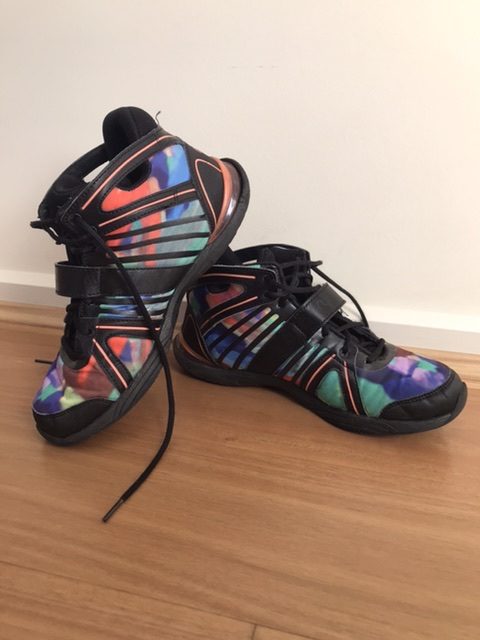
(I don’t get sponsored, but if anyone is after excellent Zumba sneakers, I can highly recommend these that I order online. They cost the same as regular sports shoes, the company designs for women’s bodies exclusively, and they have pivots underneath the ball of the foot, so that when your body spins, your knees do too.)

Planting rainbows, dancing with rainbow feet.

Visual metaphor two. Growing rainbows. Blogjune 4/21

blogjune

So, yesterday I described how I tentatively started putting down roots the day I moved into my new house in Adelaide.

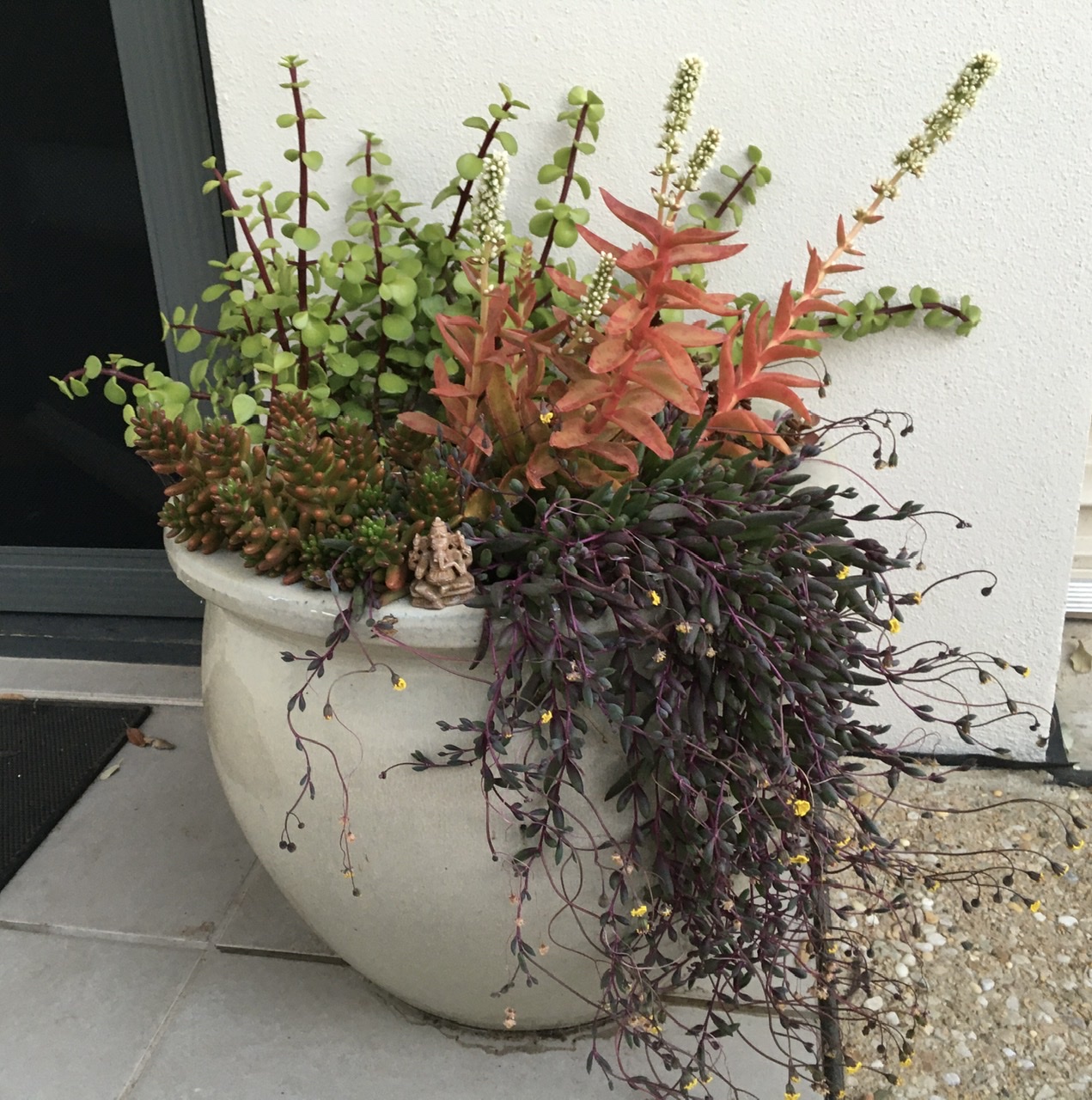
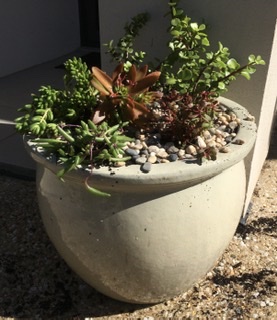
Five months later and the pot of green succulents has grown into a vibrant, unexpected rainbow, better than I planned. I planted a rainbow without knowing it.

It matches the unexpected delight of moving away from the house I built and lived in for over twenty years, and raised a couple of kids in. Surprisingly better than I expected.

For comparison, here’s how it started…

Shoving over, sharing my platform. Blogjune 2/21

blogjune

In my educational practice I have been exploring how to shove over and share my platform with other voices, amplifying theirs. Particularly Indigenous voices.

I am being paid as an expert and educator, so ethically I can only do this if it forwards the learning aims of the university, and provides excellent and relevant education for students. I teach into accredited courses, so I have to ensure course material meets the expectations of three professional associations. I think this all can be reconciled with me shoving over; in fact, done better if I do. It is taking some careful thinking and stumbling to work out the best way.

I will write more about what I am trying, and why, later in #blogjune.

Until then, watch this. Share it.

(Carmody and Kelly’s original lyrics updated with a story of Australian injustice and genocide, obviously so hard to share)

Paul Kelly & Ziggy Ramo – ‘Little Things’ live on The Set

Tapping the mic, shooting the breeze. Blogjune 1/21

blogjune

For over a decade, librarian bloggers in Australia have been re-firing up their sleeping blogs in June.

Initially, as described by Con in 2010, Blogging, thankfully , it was a way to get people who were writing semi-regularly to write more frequently. Everyone aimed to blog every day of June.

The month became a flurry of writing, reading and mutual commenting. Around five years before that, 15 years ago, this type of reflection and co-learning was the crucible that accelerated many of us to become better and more thoughtful practitioners, fast. For a couple of years, many posted at least weekly, read each other’s posts via our RSS readers daily, and commented on each others’ ideas – accelerating their development, thanking the author for their sharing and encouraging them.

Over a decade, library blogging slipped from infrequent, to marginal, to artisan.

Now the practice of blogging feels far more performative than discursive. A bit like standing solo in the spotlight, with expectation that a polished, coherent well-scripted recital will be offered… rather than just a spot to shoot the breeze.

If I am going to do #blogjune this year, then I am going to try to just shoot the breeze.

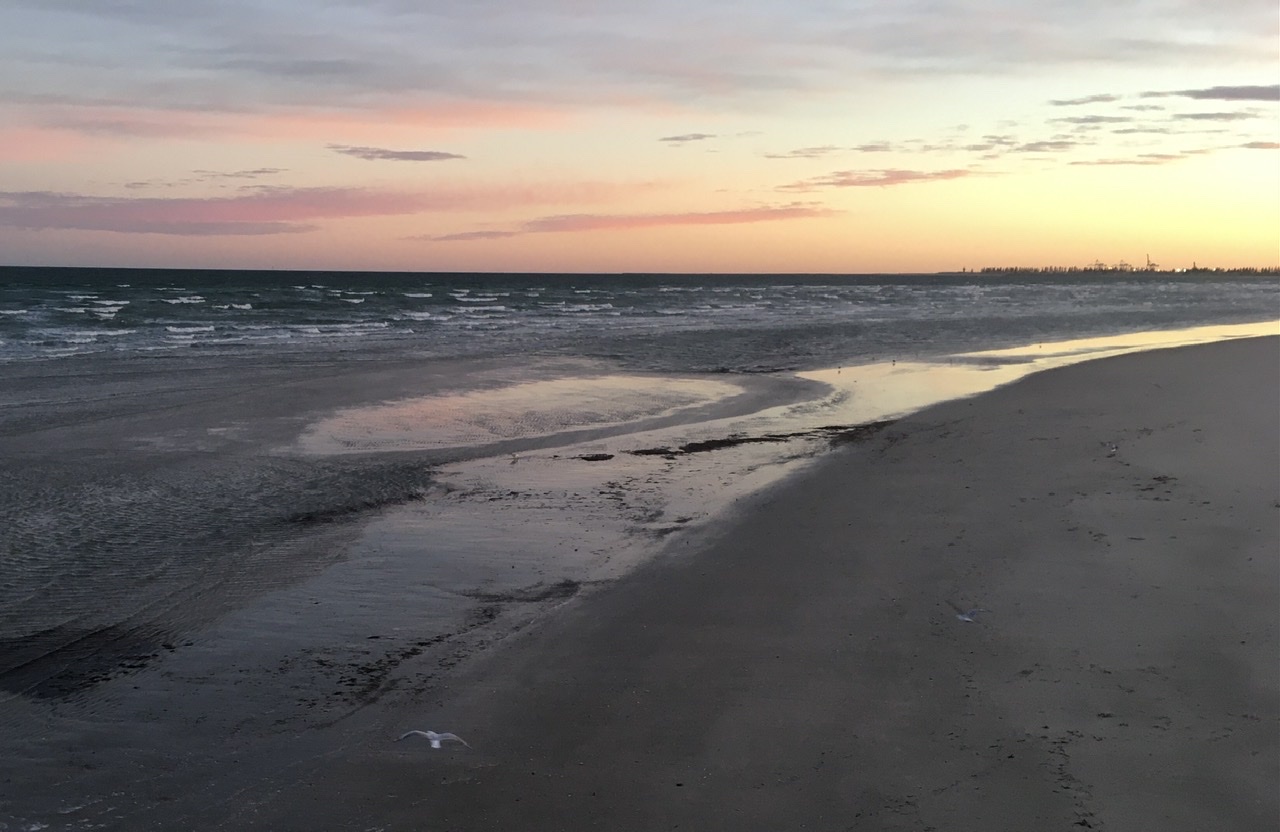
I want to post here again for a bit, but to get back to something more tentative and conversational. Almost every single aspect of my life has changed in the last 6 months, including the most amazing morning walk in the pic above, so I should have things to share – even if it is just documenting change and development.

Join me if you would like.

“Job ready” vs university education. BlogJune 2020/10

blogjune

I came from industry into a “clinical professional” teaching position at university.

My biggest learning curve was not working out what skills I needed to impart to make sure students met industry accreditation, and could adapt to future demands. That was easy. It was working out what was unique to a Bachelor-level university degree, and how I taught that.

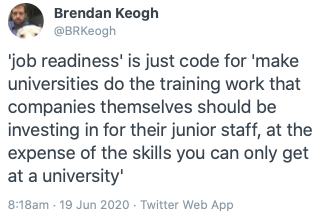
This is a riff on a Tweet from Brendan Keogh in response to the Federal Government’s announcement of an opaque clustering of disciplinary degrees, making some far cheaper to students than others.

‘job readiness’ is just code for ‘make universities do the training work that companies themselves should be investing in for their junior staff, at the expense of the skills you can only get at a university

Undergraduate students I taught were graduating with a Bachelor of Arts. What I taught had to provide the same education as other B.A.s , and other university-level Bachelor degrees. I had to learn quickly what that involved, because it was not providing the same hands-on technical training that I was used to in my career in academic and public libraries. This was not TAFE.

Thank goodness for the university’s Graduate Attributes. Paraphrased, this told me that I needed to ensure students graduated with:

  • cultural sensitivity
  • an international perspective
  • an ability to communicate clearly
  • critical thinking skills
  • disciplinary understanding

These skills had nothing, and everything, to do specifically with students’ future employment as librarians, records managers and archivists.

We were not talking “job ready” here. While we taught about general metadata structures, generally how to set parameters within a library management system, generally how to create a disposal schedule, we did not teach about specific products or procedures to suit a named or specific workplace. That would be the job of industry. Industry generously mentored our students during their degrees with practicum placements and showed them specific workplace skills and operational functioning.

Taking the graduate attributes seriously meant I wanted students at the end of my units to ask better questions. More questions, with a wider perspective, using disciplinary vocabulary and concepts. I wanted them to understand how to find and evaluate the best evidence. I wanted them to know how to express a point of view precisely and clearly, and to have already double-checked that there was evidence for that view. To make logical conclusions from the evidence before them. To be able to change their minds, to form new opinions and investigate and create new evidence where there was a gap.

Most of all, I wanted the people who would be protecting, preserving and communicating the memory and information of humanity to be humane.

A focus on “job readiness” ignores all these values. It weakens professions by valuing technical skill above independent and critical thinking. This means we get to stay on the same path, getting better at that path, without having ability to question the path itself.

The new government proposals make a Humanities degree the most expensive now, four to five times that of “teaching, clinical psychology, English, maths, nursing, languages and agriculture”. (No, I am not sure I see how that categorization works either).

This misses the point of a Humanities degree. I have a Year 12 student, and I explained it like this to him this morning.

An Arts degree has people ask “why?” and “is this actually good? and “what does good mean?” before a company makes a people-slicer ….. instead of “how can we make money from this people-slicer?” or “what is the most-efficient design and material for this people-slicer?”

What two visual items remind you of your parents? BlogJune 2020/9

blogjune

This thoughtlet is via snail’s list of things to write. He mentioned that a collection of books on Marx is a visual reminder of his dad, while for his mum, it is plastic forks.

I was considering the same question today, coincidentally. And came up with similar prosaic and quirky results.

What visual item reminds you of your parents?

Today I went out to a group event for the first time in over three months. All afternoon I did yoga and pastel drawing and guided meditation.

It was a fundraiser for staff in a retreat in the Balinese hills, thrown out of work by the pandemic. Right now is the time the annual art and yoga retreat would have been held, like the one I went on in 2018. But, not this year.

As part of a mandala drawing, we were meditating and visualising before each layer. One layer involved visualising your parents each giving you a gift. (Of course, to maintain safe space this could be interpreted as parental figures or one’s matrilineal or patrilineal ancestors).

For me, with my dad it was blue eyes. This was based on an experience around his hospital bed with a group of cousins and aunts. I answered a question, heads swivelled and I looked back into several sets of identically coloured eyes, all the same as my dad’s. I am sure that my brown ones widened.

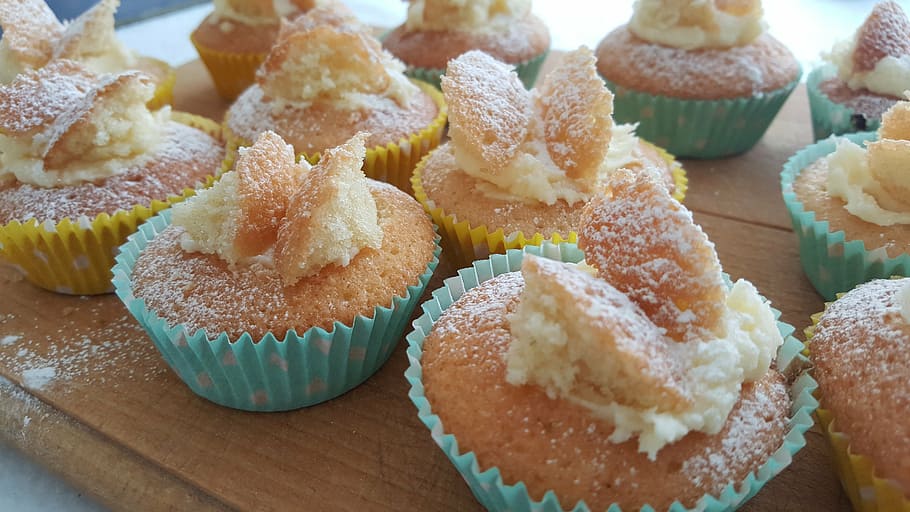
For mum, it was fairy cakes in patty pans. She was a “food is love” kind of mum. I hadn’t realised how long it is since I have seen fairy cakes (also called butterfly cakes). The extra care cutting the tops, whipping the cream, sieving the icing sugar, just to make them extra special is emblematic of the type of person she was. She put in extra effort all the time into small things that may not have mattered otherwise, just to make the everyday seem even better.

What would your two items be?

Owl stage. BlogJune 2020/8

blogjune

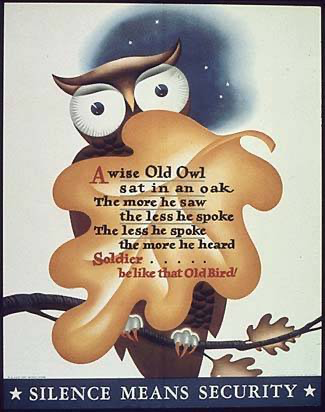
A wise old own sat in an oak,

The more he heard, the less he spoke.

The less he spoke the more he heard,

Why aren’t we all like that old bird?

English Nursery Rhyme. Oxford Dictionary of Nursery Rhymes. (1951) p. 403


I have been quiet on BlogJune for the last couple of days because I don’t really have a lot to say. I don’t think it is because I am disengaging.

I’ve spent the last 15 years or so in positions where I shared what I knew. A lot. Where I tried to model vulnerability and openness to learning by publicly modelling not-knowing, but having a go anyhow.

After the shock of my position being made redundant and all the readjustments and uncertainty that involves, I finally got to switch off that constant scanning the horizon for updated knowledge in my teaching and research areas.

https://commons.m.wikimedia.org/wiki/File:WiseOldOwlWartime.jpg

While I happily still keep up with the discipline, for a decade I felt like I was letting my students, employer, profession and work colleagues down if I didn’t at least ATTEMPT to know all there was to know about library, records and archives technology and its implications.

I did this while teaching a unit where I constantly reassured my students that knowing facts was far less important than knowing disciplinary concepts and language, where disciplinary information could be found, what authoritative evidence looked like and building networks of knowledgeable people with whom they could nut things out. Knowing who, how and what to ask being far more important than building a large network of interlinking facts carried solo in one’s head like an encyclopaedia.

Not knowing something was never a problem, I told my students. Not knowing when and how to fix that knowledge gap was.

Yet…

I felt that I needed to keep up-to-date with all the things, all the time.

I probably didn’t actually have to.

I also felt like I could not advise students to be curious and ask questions and build knowledge collaboratively if I was not doing the same. Much of the content on this blog was around trying to do that. Showing my “working out” as I tried to make sense of disciplinary knowledge.

I no longer feel like I have to walk with my head in a huge cloud of interlinked, constantly overflowing, knowledge that threatens to spill and float away if I don’t hold it aloft. I don’t have to seek, gather and integrate every new piece of vaguely-relevant knowledge that drifts past. I don’t have the same motivation to share in the way I did.

It’s not that I’ve stopped caring. It’s that my personal relationship to how we create and maintain disciplinary knowledge has shifted to more of a listening role.

(As I previewed this post, I noticed the owl in my header image staring out like it has for the last 15 years or so. “‘Yes”, it blinked at me, “you’ve finally caught up”.)