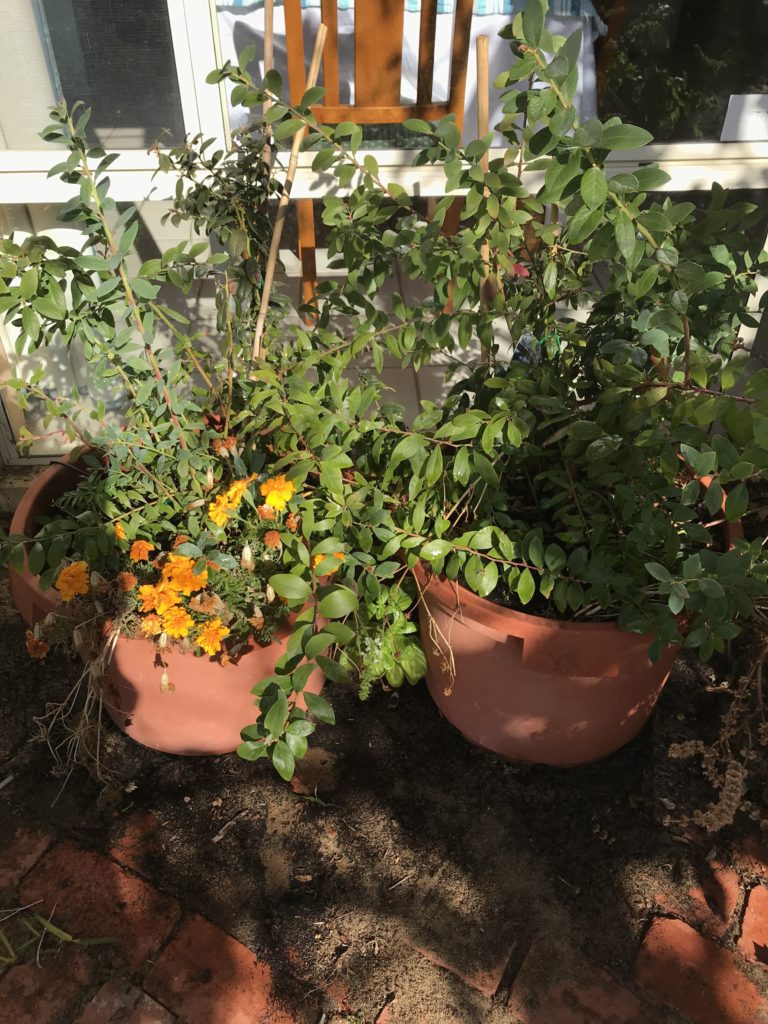
Dwarf blueberry bushes – “Sunshine Blue”. Blueberries require another compatible plant to cross-pollinate. I am not sure why I planted two of the same variety. It would make more sense to have a second variety that fruits at a slightly different time to extend the season. They have both been been prolific fruiters over a long period, so maybe it was the right decision.
I need to pick any blueberries before I let the chooks out to forage, as they will go straight to them.
The marigolds are just to add colour, but the petals look pretty in mixed salads.
Some of summer’s basil is still green and lingering between the pots, and you can see the brown heads gone to seed in the right hand side – hopefully about to self-sew all over the garden.
To improve my teaching, every year I try to take a class unfamiliar enough that I am back at “beginner’s mind” and experience the frustrations of being a new learner. I want to capture how my students probably feel when they start the units that I teach, and observe what works and what does not for me as a learner.
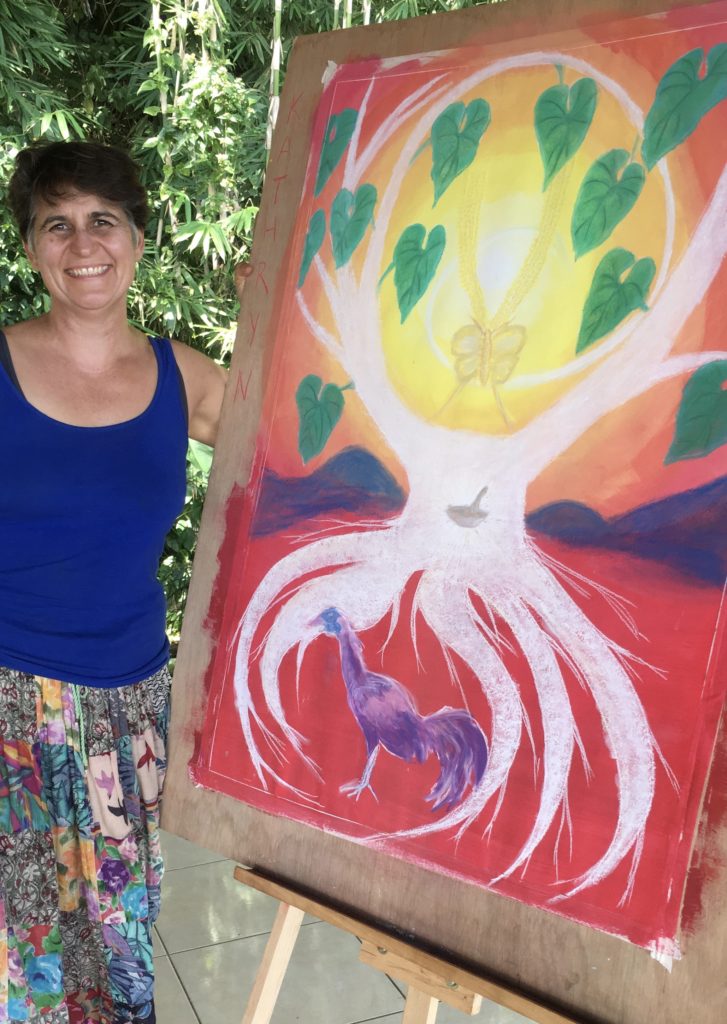
One year I did an entire term learning how to draw wings with pastels. I have made felt hats, gone on yoga retreats with no previous experience, become a Zumba instructor, tried mountain biking and sketched nudes at my local hotel’s weekly life drawing night. I tried my hand at an art retreat in Bali, with no previous experience in acrylics or watercolour.
I attended the Digital Humanities Summer School last year and deliberately sat in on the coding classes rather than ontologies and Linked Open Data – where I would have been far more comfortable. This year I learned to kayak.
I need to be reminded how it feels when grasping concepts for the first time and integrating this into existing knowledge. Part of my challenge is to not take it all so very personally. I am used to knowing what I know, and being competent, and then suddenly I am faced with something I am not good at – in fact have no idea how to do it at all.
It takes me quite a while to stop beating myself up as incompetent, rather than just … learning. I KNOW how to tie my shoelaces, keep chickens and cite using APA6 style, so WHY when I try to work out how to read in a file using Python can I simply not do it?? I feel cross and frustrated, but really need to get a grip and understand that if I already knew it, there would be no need for me to be sitting in the class. All is as it should be. Feeling incompetent is exactly where I should be.
It may mean that my job as a university teacher is as much about creating an environment for confidence and small successes in my students, normalising transitory confusion and frustration and a feeling of not knowing what is going on… as it is about providing useful course material and assessments. I try to keep that in mind with my teaching style.
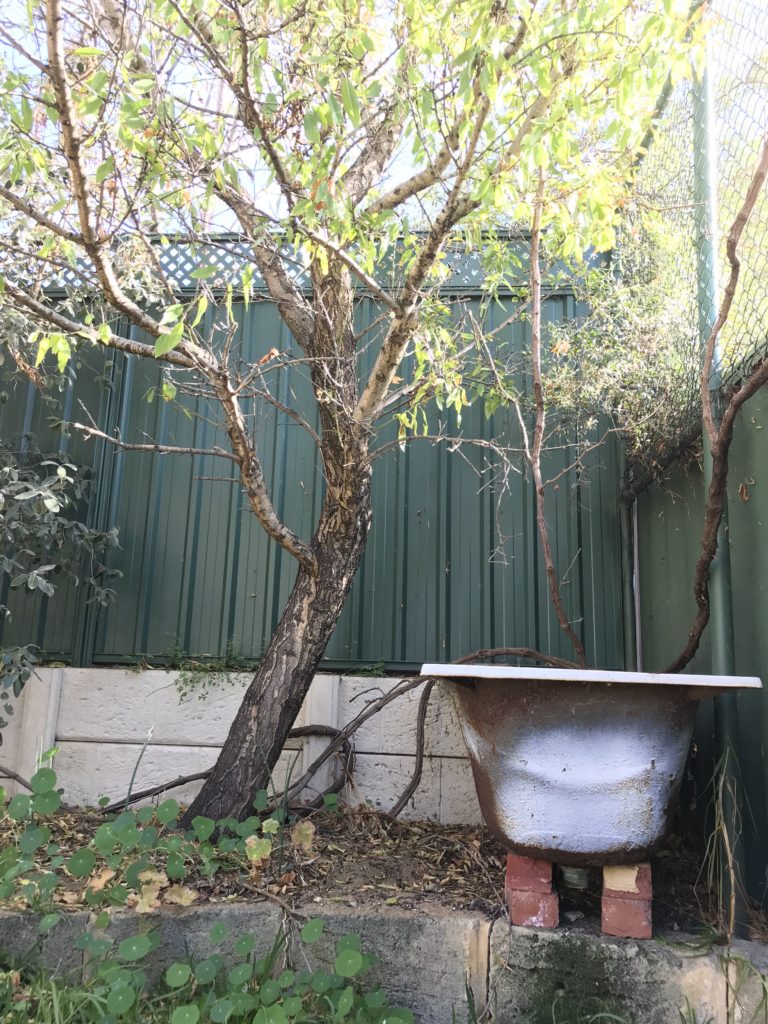
The almond tree was planted about 18 years ago for the kids to climb. The blossom is beautiful in the spring, lasting about a fortnight from first bud to over. It fruits plentifully, but I have never eaten any nuts from it. Each year the parrots descend in one afternoon when the nuts are way too early for picking, and eat the lot.
Nasturtiums bloom everywhere over winter. The entire floor of the garden is covered with them. I shared an old house in Subiaco where this happened, so when I moved here I started with one small packet of seeds. Recently I have planted the 30-metre-long driveway with any nasturtium seedlings that grew in the wrong spot. One side of the drive has taken beautifully and leaves are nowbeginning to spill out to the street. I use the flowers as a contrast to the chocolate glaze on a chocolate cake when serving. The leaves can be used in salads, but I am not overly-fond of the peppery taste.
A bobtail lizard lives in the bathtub underneath the almond.
Step 1. Ask me, or any other academic you know, whether they need a marker.
University courses are set up presuming that a large part of the work will be done by casual staff – certainly markers, and often tutors also. We always need reliable, academically-able people who want to give back a bit by mentoring the next crop of professionals.
I have excellent markers in my units at the moment and would love it if they stayed on forever… however often student numbers fluctuate, or we get asked to take on some new duty, so have a few more hours to fill.
Step 2. Adjust your expectations about doing it very well
My university pays for one hour to mark all work submitted by one student in a unit.
Economics trump pedagogy here. We adjust our assessments to try to provide meaningful activities that can be quickly marked, but I still have not got the balance right. I do not think it is actually possible.
So, as a casual marker, you would be marking in an environment where you probably could not give the amount of constructive feedback you would like to, nor spend as much time as you would like in double-checking that you have made the right call. Or, as John alluded to, you spend longer than allocated, so the rate per hour effectively decreases.
However, I would far rather have a well-intentioned marker who does their best within the limitations and who understands that they cannot do half the job they would like to … rather than someone who cynically would turn up, be paid, and work to rule to do the minimum possible job.
To make it a *little* bit easier, I spend a lot of time creating comprehensive marking guides and make myself very available to markers when an assessment has been submitted.
Step 3. Check you meet other requirements
For my units you would need:
At least a Masters degree in the area
You would be marking postgraduate as well as undergraduate work.
Seasonally-available time.
Generally there is a 18 day turnaround between work being submitted and me looking over the marks to moderate them before returning work to the student.
Most of the work is May/June then September, October, November.
You are looking at around 5 – 60 or so assessments to mark in one sitting.
Tolerance for a high learning-curve the first semester.
Aiming to “just try it for a semester” would probably set you up to fail, because there is so much to learn the first time about:
the admin requirements of the particular university
the online system(s) used
how the individual unit coordinator uses the system
the unit materials
the assessment instructions
the marking criteria
your own ability to judge, make a call about a mark, and just move on
BUT – once that first semester is over, there may be small things that change, but it is all much, much, much easier and quicker.
Efficiency and reliability.
Excellent academic writing skills – grammar, spelling, expression and citation
Understanding how to evaluate sources for authority – both scholarly and technological. So understanding of recency, authorship, purpose, peer-review, valid evidence, logical conclusions, contextualising within disciplinary debate.
Disciplinary and tech knowledge. My units have a focus on how tech is used in the field, and I really value markers who can judge whether student work is of a standard that would be acceptable in the workplace
Tact and clarity. The ability to encourage and support, while being very clear with students how to improve
Step 4. Email your CV directly to the academic, asking them to consider you as a future marker and whether you can provide further information.
Include information about:
Your highest qualification
Any experience you have with teaching or marking. This can include teaching in other areas (e.g. as a music teacher) or information literacy sessions with clients, or being an embedded librarian in your university learning management system.
Someone who could chat about your previous teaching/marking work
Your work history
Step 5. Wait.
Generally we will not have any work right now.
We often do not know until right before semester whether we will have any work, and then will suddenly contact you about starting in a couple of weeks
We sometimes share CVs for potential markers with other academics in the same area, and sometimes do not.
For me? Far less educated when I became a librarian, having tried far fewer other hats on, but I also grew from student-worker in the university library to full-fledged librarian. And danced a bit with academia around the edges.
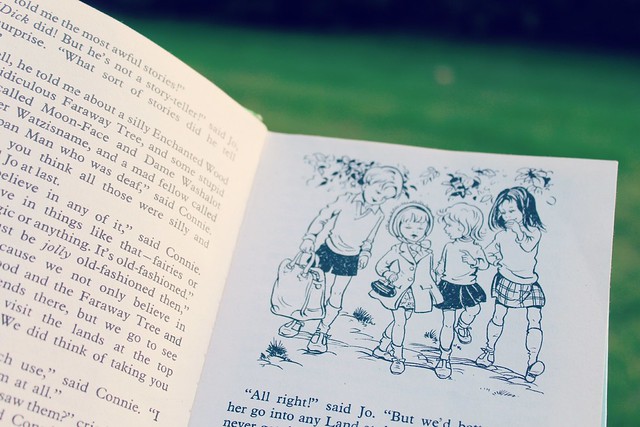
I was pretty sure I wanted to be a librarian very early on (and do admit to organising my Enid Blyton books with my own classification scheme which involved letters AND numbers and a lot of duct tape on spines).
Part of this was being a country-town girl at the tail end of Australia’s free tertiary education experiment, who saw books, reading and education as the only way to escape an alternative future of either early pregnancy or drug-dazed adolescence, with no hope EVER otherwise living in a place with sophisticated exotic infrastructure like traffic lights or a Chinese Restaurant.
On the way, I was told by my maths teacher I was “too smart for that” and “should think about being an engineer”. And in response convinced myself that I should aim high and try something that I maybe would have some interest in, and go to Law School.
By my second year at the University of Western Australia I was studying a 33% overload as one of the first 20 students admitted to a combined Arts/Law degree. I had tried apple-thinning over one summer to earn enough for next semester, and then by second year had moved to a private girl’s school as a live-in boarding mistress. Board and accommodation were provided in return for 20 hours of work a week. Not surprisingly, I sustained this until Easter before moving to college near the university and becoming financially dependent on my mother for eight months… until a college friend on the University Library committee suggested I apply for a job in the Reid Library for the upcoming academic year.
Reader, I liked it.
I was in Fine Arts, Architecture and Special Collections, so spent countless nights filing slides that the Visual Arts students viewed at the light table or borrowed overnight. If anyone wanted to know what Hunterwasserhaus looked like, we were the only place in town who could show you.
I would sneak into the Special Collections and browse the Festival of Perth programmes going back to the first ones in the 1950’s. As a Theatre Studies student I was overjoyed to discover a cache of notes from Peter Brook’s production of the Mahabharata in Perth, detailing the bump in and bump out plans. I spent one evening browsing the collection of original PhDs, trying to locate the first one written by a woman… depressingly difficult to locate.
When law school lost its gloss for the first time, I finished my arts degree and drifted over to Curtin to do a one year Graduate Diploma in Information and Library Studies. All the while still working in the UWA library at nights. I left the job half way through the year to work as a librarian/researcher in a small St George’s Terrace law firm, completing my Grad Dip in the same year.
Unlike Barbara or Chris, I was a long, long way from Grad School when I started my first full-time position as a 23 year old, as a systems librarian in a three-branch public library. It would be another 20 years before I completed my Master in Information Management back at Curtin again, being hired as an Associate Lecturer in the department about a month before my Masters thesis was finally marked.
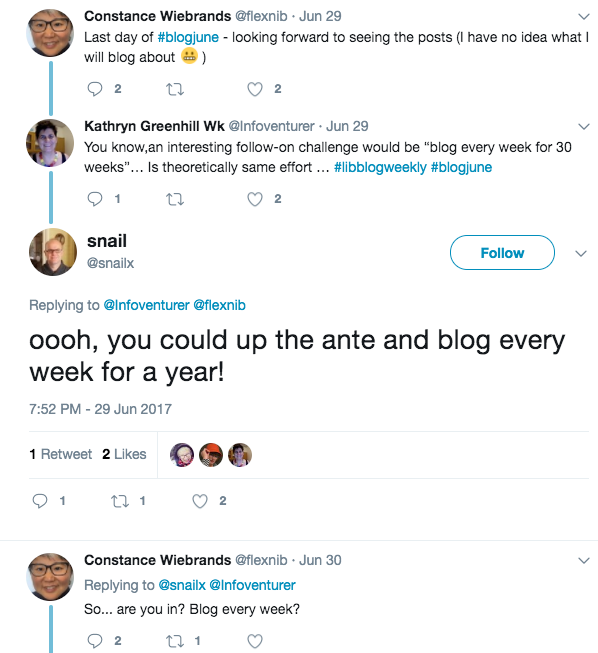
Anyhow, it looks like a bunch of us are committing to blogging once a week, publishing some time on Monday.This timeline lets us write a post any time we are moved to, but then just schedule it to go out on Monday.
Hashtag is yet to be determined. I have used RSS feed readers to keep up with #blogjune in the past, first Google Reader, then on its demise I used feedly . In the last couple of years, though, I just added a column to my Tweetdeck app and displayed any post for the #blogjune hashtag. (I started writing here about how to set up your blog to post automatically to Twitter, but realised that THIS is better kept as my Monday post topic).
For this way of updating to work for me (and, of course, this is all about things working for ME 🙂 ) I think we need something unique to the project. I just looked at the Twitter feeds for #libblogweekly and for #glamblog . The first hashtag has a tweet from me and one from Con. The second had some of our discussion, some really nice and useful posts to other GLAM-sector blogs… and a couple of lovely tips about glitter eyeshadow, super poses I could strike while modelling winter wear and how to win a free prom dress… If it is OK with everyone, I would like to go with #libblogweekly 🙂
(Edit before posting: because I can never just settle on ONE thing,
What about instead …
#glamblogweekly ??
I’m tagging THIS post with #blogjune so people who were #blogjune-ing in the same way I did can find this and jump to #glamblogweekly or whatever hashtag we use ?
The discipline and structure of needing to publish daily was a huge advantage to #blogjune. Don’t think too hard, but just hard enough. Don’t wait until the perfect topic or way of saying has been achieved (often a big block with blogging I think), but get something out. I like the idea of weekly posts. I am guessing that there will be some “OMG, it’s Sunday night, what will I write for tomorrow” posts, but we’ll see.
… and nothing stopping me from saying it here after #blogjune has finished … but I suspect that I will pipe down a bit for a while.
I still haven’t responded to Paul’s discussion of Content as Experience … in which I would argue that if libraries are looking at “competition” or what is a similar experience to our book-lending service, then we have to compare it to other cultural-consumption experiences, rather than considering it mainly as physical stock-movement. “We give it to them for free” shows misunderstanding of the costs of access to get to the physical …
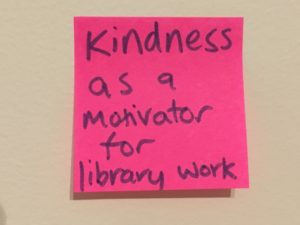
And I wanted to ask whether everyone thought that “Kindness as a motivator for library work” was a limp and wishy-washy navel-gazing potential PhD topic. (Explanation: something techie would go stale in the 6 years it would take me to finish part-time, and actually when I think about what I really care about, what I am passionate about, it probably is kindness…).
And to compliment Ruth on her quiet and discreet (yes, it is you I am talking about…) efforts to give encouraging comments on almost every post I visited on other people’s #blogjune posts.
And mention how much I enjoy Andrew’s thoughts about ..well, everything. And snail’s reviews of films AND snails. And that Con’s post today is almost the same as what I would have written, except she did it first. And then feel like I have missed out on several people who did mighty jobs and made interesting posts who I DID read, but just did not mention here…who are from the next generation of up and coming library communicators, and reassure me that the on-going conversation is in good hands.
Or to ponder why, with the best intentions, I think I am unlikely to be able to keep up a “post once a week” for a year challenge …. even though #blogjune is really equal to over half of the effort involved.
Or – if you have been lurking, you could make this your one #blogjune post and play too. As long as you pop it somewhere with a URL then post the URL to Twitter with the #blogjune hashtag then I will slurp it up into a Storify here tomorrow. The topics are below. Respond to just one or both.
If you could go back and tell your 20 year old self one thing that was going to happen to you between then and today, what would that be?
In 20 years time (presuming the world gets better, not worse) what do you think will be the biggest technological difference between your life now and your life then ?
And – although I have had a lot of time to think, I am not really prepared.
If I went back to when I was 20, I guess I would let myself know that my mum would die in 12 years time. I am not sure whether the rules of this question allow it (heck – it’s my question, they do) but I would tell my younger self that there was a test for that kind of slow-growing cancer and that I should persuade mum to get checked regularly.
In 20 years time, I think the biggest difference will be around being able to be identified without any doubt. I can imagine some kind of remote DNA scanner that would be incorporated in many of the sites that we are today hooking up as “Internet of Things”, but super-augmented to the point that everything in my environment was tracking me and recording data. Since the world gets better, rather than leading to some kind of dystopian enslavement and restriction, it would mean incredible freedoms. Shops would “know” whether I had funds to pay for something, so I could just take it. Take it? They would know where I lived and would deliver it. I could even shop somewhere that understood my inherited metabolic needs, so would tailor my diet to any intolerances that I may have or foods that would be better for my body. No need for a library card, customer loyalty card, even for keys.
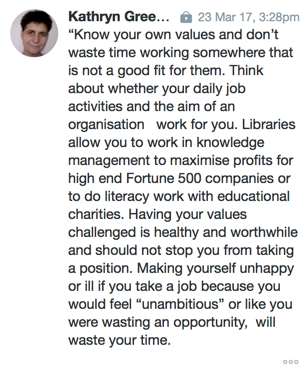
“Know your own values and don’t waste time working somewhere that is not a good fit for them. Think about whether your daily job activities and the aim of an organisation work for you. Libraries allow you to work in knowledge management to maximise profits for high end Fortune 500 companies or to do literacy work with educational charities. Having your values challenged is healthy and worthwhile and should not stop you from taking a position. Making yourself unhappy or ill if you take a job because you would feel “unambitious” or like you were wasting an opportunity, will waste your time.
(By the way, if you want to play #blogjune and have not, or are already playing …. and would like a topic for Wednesday 28 June, then please be part of my Time Travel Challenge and answer one or both of these questions … and post a link to Twitter with the #blogjune hashtag:
If you could go back and tell your 20 year old self one thing that was going to happen to you between then and today, what would that be?
In 20 years time (presuming the world gets better, not worse) what do you think will be the biggest technological difference between your life now and your life then ? )