
… it forward.
As someone who received much informal mentoring in the profession while I was still very wet behind the ears, I owe a debt to the wonderful women (and, yes they were all women) who took me under their wings and into their confidences to help me to develop into the information professional I am now.
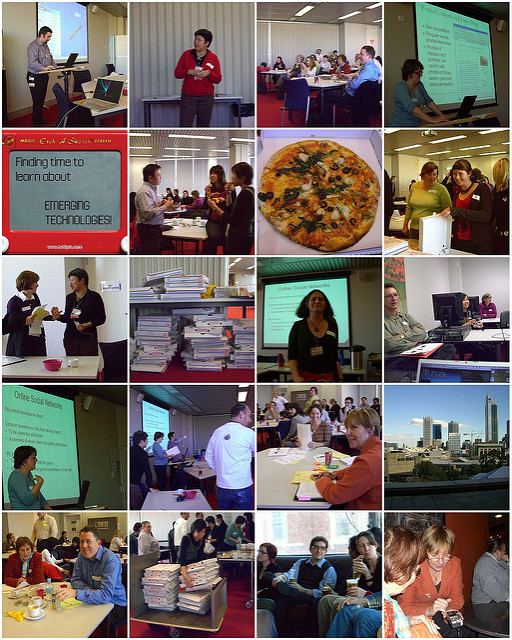
Co-mentoring 10 years ago. Library 2.0 Camp. EVERYONE stepped up to mentor each other.
Any rough edges still here have been maintained by my own action/inaction, but my goodness there were previously a lot more, that needed the gentlest and most patient polishing. Mentors pointed these out in the most helpful way, and gave me either the advice, the lesson or the experience to work out how to do the polishing for myself. Sometimes it was “you know that thing you’re doing? Don’t do that”. Sometimes it was “I used to do that thing when I started out. Here’s why I don’t do it now and how I fixed it”. Other times it was “I want you to go and work out how to do this Other Thing with no advice or help from me, because I know that you can do it (and my ulterior motive is that I know it will stop you doing that thing you are doing)”.
One of the smartest bits of mentoring I received was rather recursive, learning about mentoring itself. My reflection one year on after attending the Aurora leadership institute summarises this:
Aurora has taught me that one can truly lead from any position. I now place a higher value on mentorship than I did – and understand how I can be a mentor. Before Aurora I thought I was too lowly, too new in the game to think of mentoring anyone else. Now I realise that it’s not about being extremely wise and venerable and passing information on in some kind of master/novice relationship.
Mentoring can be about encouraging others, providing opportunities for them to shine, acknowledging fantastic efforts, spotting the dreams they might have and reinforcing that they are on the right path, or suggesting new ones… and even being brave enough to step out of my comfort zone and have a word when I think that someone may be damaging their career.
At Aurora we spent time with mentors who are leaders in our field. I now understand that they have no superpowers and are very human and very individual. This has made what they do seem more within the reach of us regular folk. It also makes what they do seem all the more remarkable – without magic fairy dust they are able to keep large organisations functioning or contribute substantially to our professional organisation – super effectively using the same 24 hours that we are all allocated for each day.
Instead of magic fairy dust, they all seemed to have a strong and certain commitment to what they do. They all seemed to masterfully work out what was the most important thing for them to do at any one time, and then focus on doing that. They were all comfortable in the role of leader. They all obviously actively engaged with the world outside their institutions, and brought that knowledge back to strengthen their home institution.
I think since then I have had more experience with the idea of “co-mentorship”. Trying to offer and contribute help (and listen! still my big challenge) tends to be the most effective way for me to receive mentoring help. My experience has almost been a “strike first” mentality, where the times when I got in there, was involved and engaged, were those where I got the most out professionally as well…
So, how do you “get” a mentor ? I am serious about the “start contributing” bit. You always have something to offer and often mentoring relationships can start, for example, when you are helping hand out name labels at a professional event. Ask someone directly. Know what you would like to get out of the relationship and, rather than asking that they “mentor” you generally, try with “I really like the way you [do this thing well] and would like to find out a bit more about it/ develop this in myself, could we catch up for a coffee to chat about it”? . Ask them an unsolicited question that you really do want to know about. Find a peer and arrange to co-mentor. Sometimes you do not realise you are being mentored until years later (“Person X! Mentoring? She just told me stories about her professional life/told me how to do stuff/introduced me to that fascinating colleague/kept emailing me journal articles/encouraged me to apply for that job… ooooooohh…). Mentorship tends to be a bit like friendship and can develop with a gentle push when you aim for mutual, beneficial exchange, but I am not sure there is a fast track way to create a mentoring relationship.
Which brings me full circle. I owe a debt to all my professional mentors. Support was offered in good faith and my initial investment as a new mentee was to engage and learn and get involved in many, many different ways, with the same good faith. Part of the mentoring journey for me was to learn that THIS is actually also how I get to pay for it, to pay it back. The investment of my mentors in me was not about me as a person I think (although I think I’m pretty fab), but in the profession itself, and in perpetuating a professional generosity. Now, I hope that the investment of my mentors in me is being repaid to the profession in the obligation I feel to pay it forward. Professional mentoring, I think, works best when most of the paying is from the mentors (once mentees), paying forward.
I absolutely love this post Kathryn, it’s such terrific advice.