A few more library-related English sights

Uncategorized

Visiting Portobello Road on a Sunday, the Notting Hill Gate Library was closed. Pity, as it looked fascinating:


On Saturday, we visited Bletchley Park. About 40 minutes by train out of London, this old manor house was the centre of English codebreaking during World War Two. There Alan Turing designed the Bombe and Tommy Flowers created the Colossus  , two machines that were forerunners to today’s programmable computers. It is fitting that the National Museum of Computing is now located there. It is in one of the old codebreakers’ huts, and as a self-funded privately created organisation it is not posh looking:

One of the rooms that fascinated me was dedicated to Powers Samas punchcard computers. In the early weeks of my technology unit, I show students an image from Christchurch City Libraries in 1958 showing some of the first library automation efforts – using Powers Samas punchcards:

Bletchley Park not only has information about the codebreakers, but has a fully reconstructed working Bombe, a model railway exhibition, a cottage full of a collection of children’s toys from 1930’s – 60’s, a wartime post office, several working Enigma crpytographic machines, and even a room dedicated to the exploits of heroic wartime pigeons like William of Orange .

I took a snap of the library in the manor house as the light faded. The whole building felt like a Cluedo set come to life.

Librarianly news from London

Uncategorized

Today is my fifth day in London.

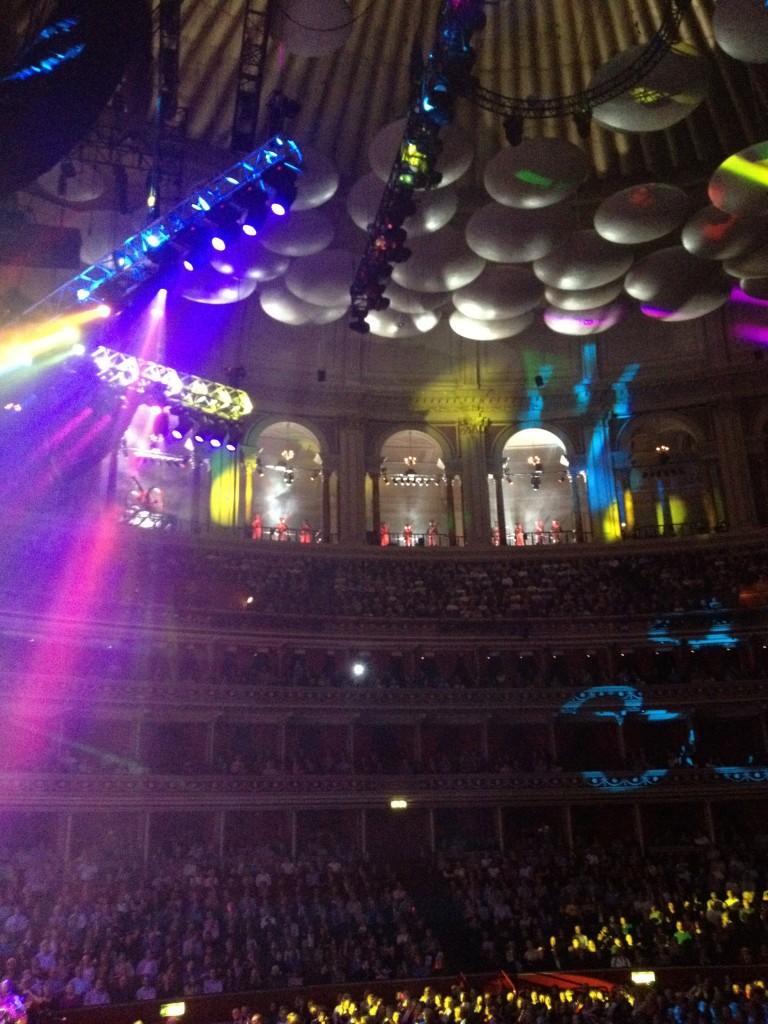
We arrived 6:20am on Sunday and by 11am were on a four hour bike tour of London. It is not surprising that both kids fell asleep that night at the Royal Albert Hall where we watched the Classical Spectacular.  They slept through the Royal Philharmonic Orchestra, a marching regiment, indoor fireworks, balloons falling from the ceiling, cannons firing to the 1812 Overture, CanCan dancers in the aisle and stirring applause after each number.
The four of us are travelling using carry-on luggage only. We will see whether we succeed with seven weeks’ travel. We are setting up a blog to talk about our travels, post minifig photos and reveal Mr13’s daily “top ten” lists. We’ll be commenting on those daily oddities – like buying seven bananas at Marks and Spencer’s for just 50p – which would cost around $5 back home. When the site is ready, I will post a link here.

What have I seen so far that is librarianly?

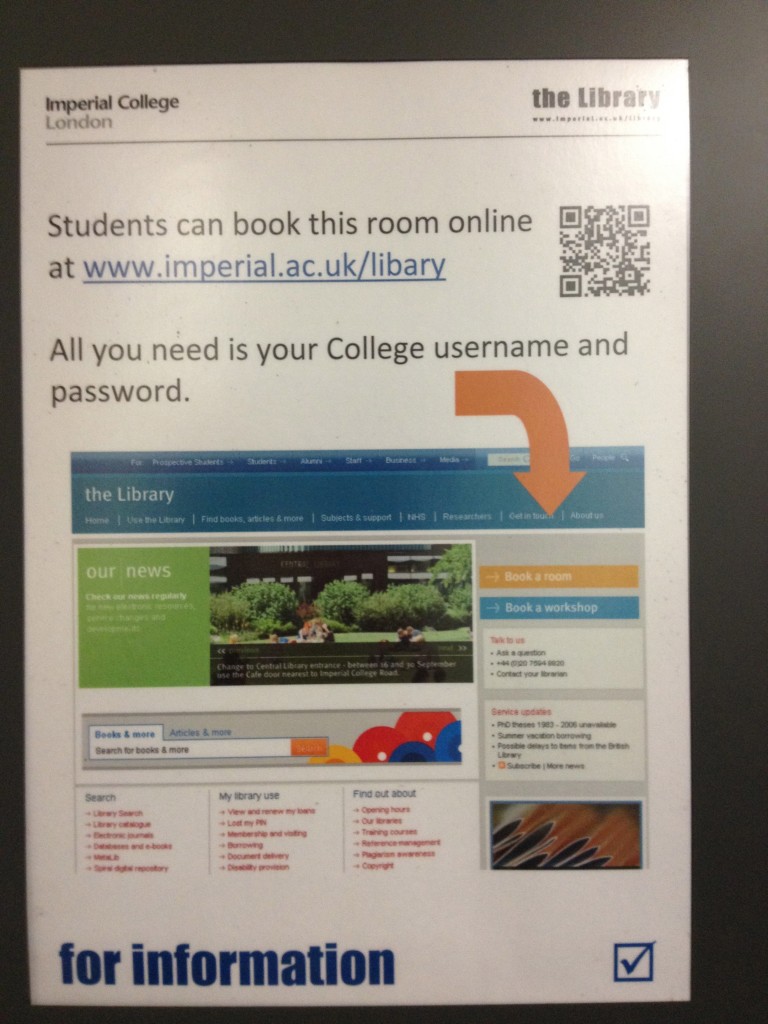
1. Good use of QR codes in Imperial College London library.

You have probably heard me get really cross about trendy and pointless uses of QR codes in libraries (like QR codes in email signatures … if someone can explain to me WHY that would ever be useful instead of just posting a link then I would be grateful).

QR codes work well when they link physical objects to something online that increases the utility of the object (either by further information, or something interactive). When my  Australian librarian friend Jenny Evans gave me a tour of the library I saw this very sensible use outside their bookable computer labs:
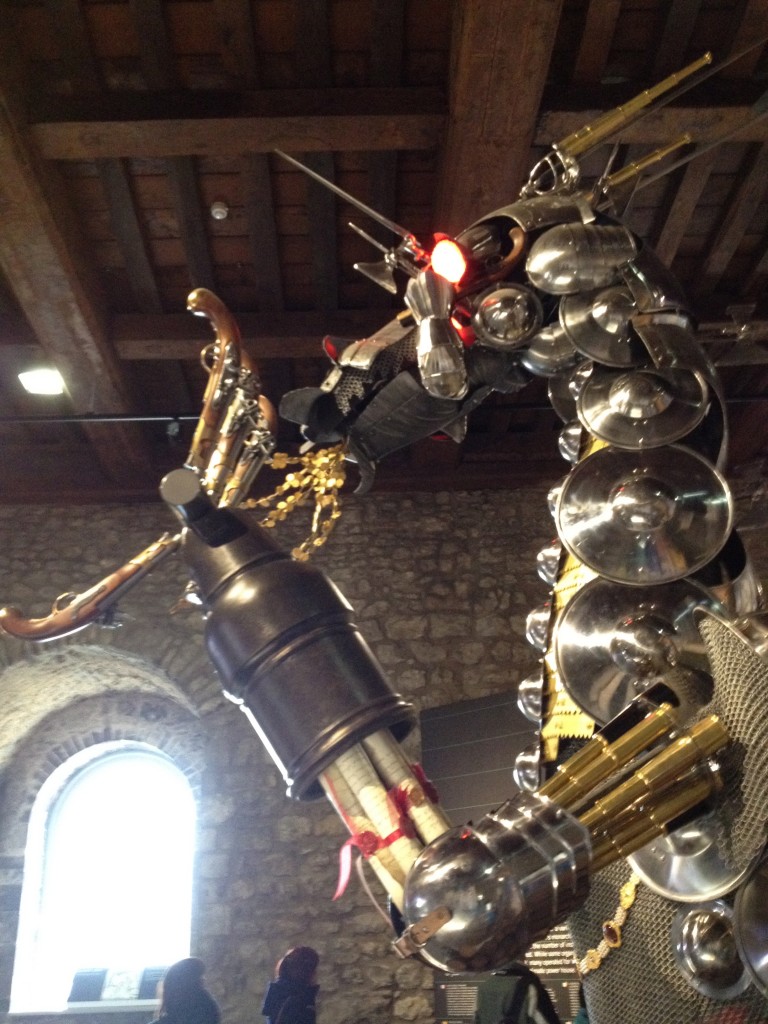
2. Records in the dragon in the tower

It is apparently traditional to build large sculptures from weapons won in battle – like this giant dragon in the Tower of London built by the Royal Armouries. It contains over 2672 items, including 26 telescopes, two cannons and 15 pollaxes.
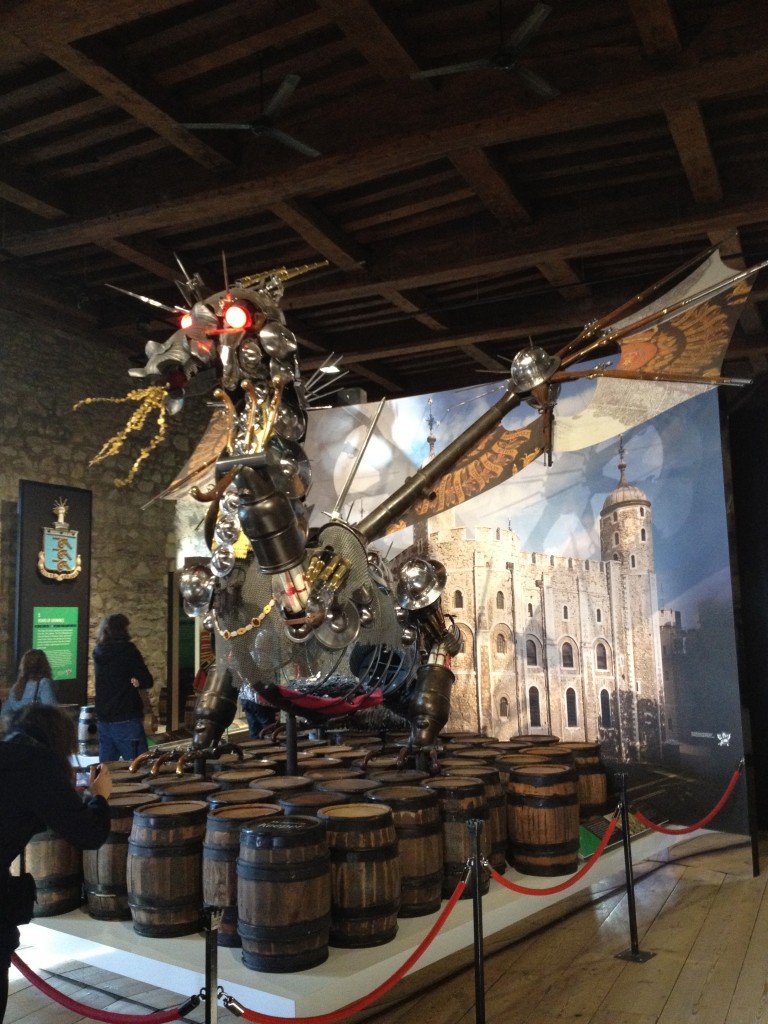
If you look closer, however, you will see that it is also celebrating the ten different institutions that have been part of the Tower. This includes the – more peaceable? – Records Office.

The dragon’s limbs are made of scrolls from the Records Office:
3. Art library at the Victoria and Albert Museum

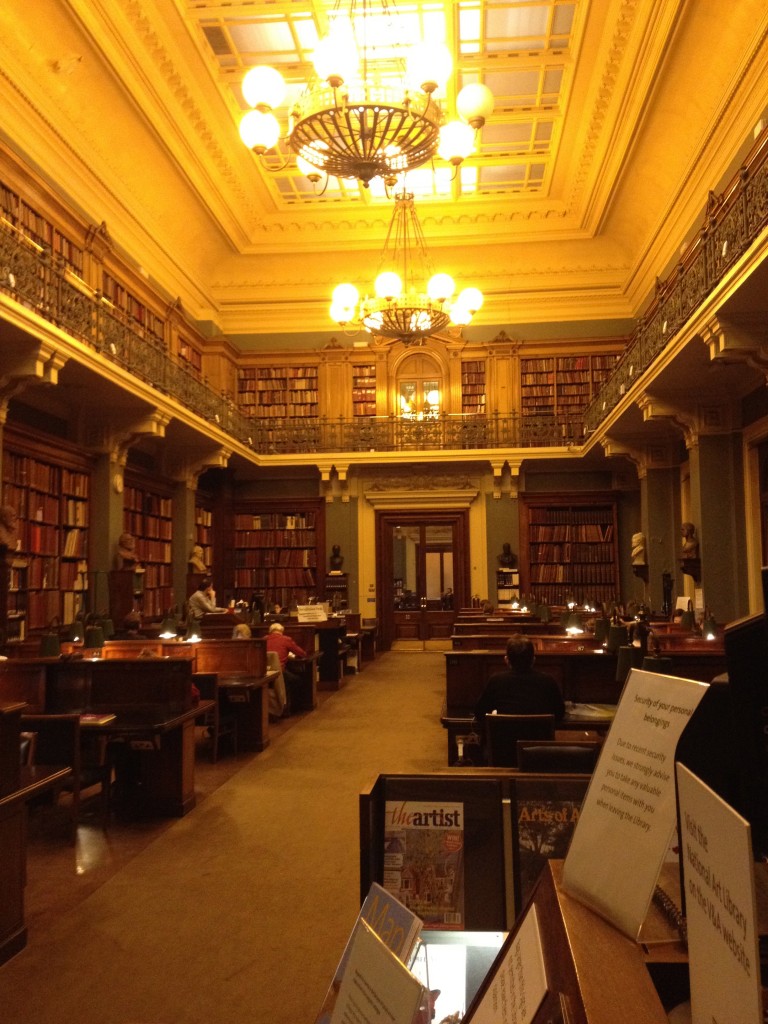
Apparently much of the stock is off-site, but if I ever need an image of the “traditional” research library, then the National Art Library at the Victoria and Albert Museum would be a great candidate.
4. A literacy campaign ( that forgot libraries ?)

As we ride the tube, we see these posters telling us that “Nicky Helps Kids Read”.
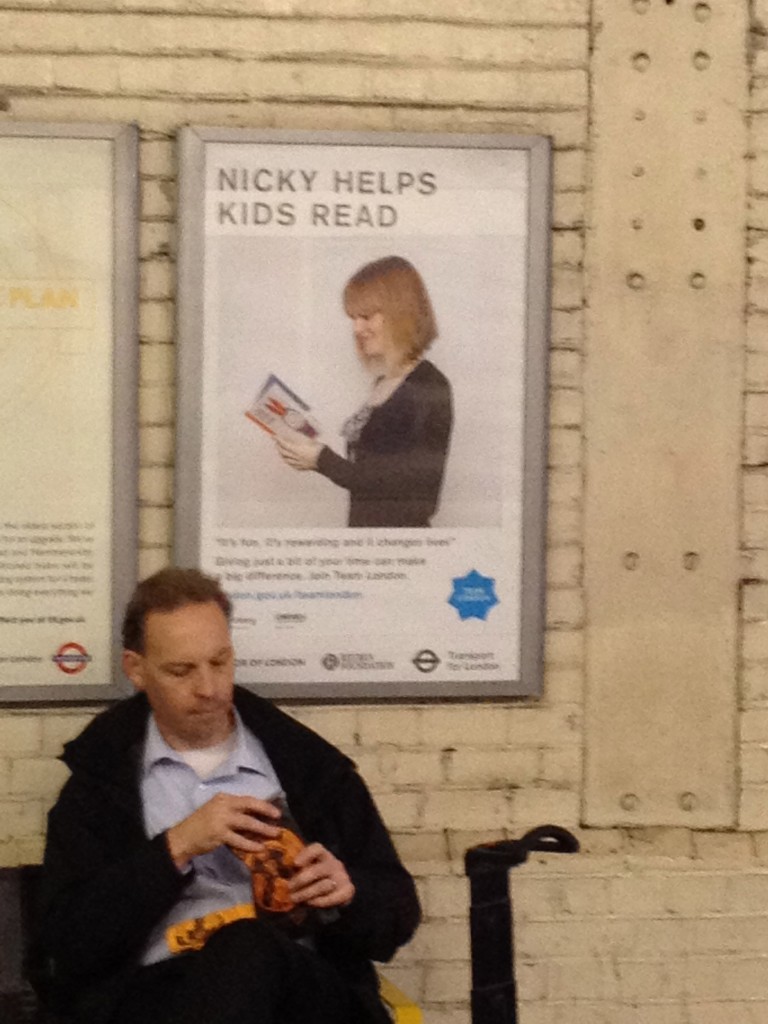
At first I thought it was an advert promoting the government’s “Big Society” initiatives, where cost saving measures are replacing professional staff with volunteers, as has been done in Oxfordshire. In June 20 out of 43 libraries in the constituency were set to close,  however it was also planned for six libraries to have all professional staff replaced by volunteers.

Apparently, though, it is promoting a literacy campaign that is being led by one of the local tabloid newspapers, called Get London Reading . Hundreds of volunteers are going in to schools to do one-on-one reading programmes with kids with low literacy levels. Apparently – and this is an outsiders’ view so I would love to be wrong – this is not involving local and school libraries as part of the program. In fact, the British Library has been running a similar programme with staff volunteers for the last eight years. Seems like an opportunity missed by underfunded libraries and the programme organisers – although there have been people pointing out the hypocrisy of government ministers supporting the Get London Reading campaign, while making it harder for kids to read by closing local libraries.


I’d love to have coffee with you on my World Tour

Uncategorized

Want to have coffee?

I would love to know what you are doing in your library, where you think libraries are going and library-types of places I could visit.

I am lucky enough to be taking a Big Family Holiday at the end of the year. It is mainly just being mum and wife and enjoying my family’s company, so it is not work … BUT…

If you read this blog, want to talk library, have ideas of library places to visit or would like to catch up and are in or near:

  • London
  • Paris
  • Barcelona
  • Orlando, Florida
  • Washington DC
  • New York City
  • SanFrancisco

– let’s do it.

Please feel free to add suggested places to visit in the comments below, or if you want to have coffee then drop me an email: kathryn dot greenhill at gmail dot com , and let’s arrange something.

How to become an expert in technology tools for the humanities

Uncategorized

The nice folk at the  Center for History and New Media at George Mason University  awarded me a  Mellon THATcamp fellowship to help toward my attendance at the Bootcamp part of THATCampCanberra . In return, they asked for  my reflections on what I learned at THATcamp bootcamp and unconference sessions and how I may apply it in the future.

This is a bit longer and ramblier than than my usual posts.

tl:dr version – Chutzpah and determination rather than technical knowledge is more likely to make one a digital humanities expert


Attending bootcamp clarified my thinking around how I can best learn about and apply technological tools in the humanities. To get the most out of any learning event like this, I now realise I need to spend time shortly before or after trying to build or make something with the tools featured. I now feel much more confident about my ability to do this.

While the theoretical information in the bootcamp sessions was useful, I could find out this from researching and reading. What was invaluable was hearing about the creative process of project design and configuring and building the tools, which approaches had been tried and rejected, self-critiques of decisions made and how things could have been done differently – plus hearing the questions asked by others in the session. It was clear that people were not coming to projects as fully-fledged experts, but spent much time researching and problem-solving – and in some cases chutzpah and determination were much more useful qualities than initial technical knowledge. The second was ultimately gained through the first.

I think I pull back from trying these kinds of projects because I feel that I need to already know about the tools, standards and data structures I will need before I even begin. I have spent the last 18 months trying to convince my students that they can be competent learners in unfamiliar technologies if they have confidence and know how to look things up or seek support – something I obviously need to internalise a little more.

To learn, I need to contextualise new tools with what I already know. Sounds obvious, but it was not until I was trying to quietly build my own copy of a LibX toolbar for the National Library in the middle of the session about the NLA Party Infrastructure that I realised how essential this contextualisation is. I thought I was losing focus and was doing the equivalent of doodling. Then I realised that specifying the contextual searches in the LibX toolbar is a way of interrogating and outputting an enquiry to a public API without having to know about much more than how to format the enquiry string. Basil Dewhurst was explaining the query structure for the NLA Party APIs, so this was a quick and dirty way for me to understand how this worked. It also clarified for me that I should go off and play with Yahoo Pipes or equivalent to play with enquiring and outputting from the NLA Party Infrastructure.

During the bootcamp sessions, I became more mindful that some of my questions were about fitting new tools and skills into what I already knew. I understood better why I was asking “how does this relate to…” or “could your use this to…” or “did you think about doing …” I think I will be much more understanding when students go off on what seem to be tangents, or ask questions that I think I had just answered – as they are probably trying to fit new knowledge to a personal context, rather than seeking information.

I attended four sessions at Bootcamp:

Introducing the NLA party Infrastructure: http://thatcampcanberra.org/bootcamp/bootcamp-introducing-the-nla-party-infrastructure/

Mining Trove newspapers http://thatcampcanberra.org/bootcamp/bootcamp-mining-trove-newspapers/

Using the Literature Object Re-Use and Exchange http://thatcampcanberra.org/bootcamp/bootcamp-using-lore/

Using Google Refine for Humanities Datasets http://thatcampcanberra.org/bootcamp/bootcamp-google-refine-for-humanities-datasets/

>>>>>>>>>>>

There are several posts dated 30 September to 10 October  about the subject matter of sessions that I attended, links pushed out and events that happened during THATcamp.

I have a few points to think about and maybe develop further.

  1. Events like THATcamp and the Digital Public Sphere work better for me than reading journal articles or attending formal conferences  as a way to understand the knowledge, attitudes, challenges, failure and humour of practitioners and theorists in my research area.
  2. I still have not really settled on a research area, but the last few days have crystallised research interests I would like explore… I could observe what really interested me, where I already knew things and the tools and techniques that I was excited to find out about. I just need to sleep on it and do a bit more journalling and drawing to work out exactly what they are.
  3. I think I would rather be an educator/maker/builder/person who helps other people  than what my job currently requires me to be – which is an educator/researcher/person who helps other people. I guess I need to find a way for making/building to be classed as research…
  4. Why do so many people re-invent beautiful and useful wheels? Seems almost like it is harder to understand what each other are doing than to create from ground up.

I have spent all day sitting under the beautiful windows of the National Library of Australia. Time to catch a flight…

THATcamp Canberra link follow up hitlist

Uncategorized

During the sessions at THATcamp Canberra 2011 I began compiling a list of concepts/tools that I should try hands-on in the next six months. For many of them I could give a perfectly accurate theoretical description, but have not really internalised them. The hitlist started with about 10 links. Easy.

By the time I had check through other notes and tweets it grew … somewhat …

Here is the “suck it and see” list:


>>>>>>>>>


 THEN I WENT BACK AND FOUND THE LINKS THAT WERE PUSHED OUT IN THE TWITTER STREAM AND SEEMED INTERESTING:. oops….


What skills are needed for the Digital Humanities?

Uncategorized

Kate Davis and I facilitated a session where we aimed to produce a list of skills needed by people working in the digital humanities.

We asked the group from two points of view:
1. What skills do researchers in the Digital Humanities need?
2. What should Information Studies courses in universities be teaching so that graduates can support the digital humanities ?

Kate and I teach similar topics, accredited by the same professional body, however her school is in the IT faculty while mine is in the Humanities.

The requirements that people wanted were very similar to what librarians wanted taught when I asked them this time last year. People want flexible lifelong learners who believe that they are capable and have the generic graduate attributes that are taught at universities.

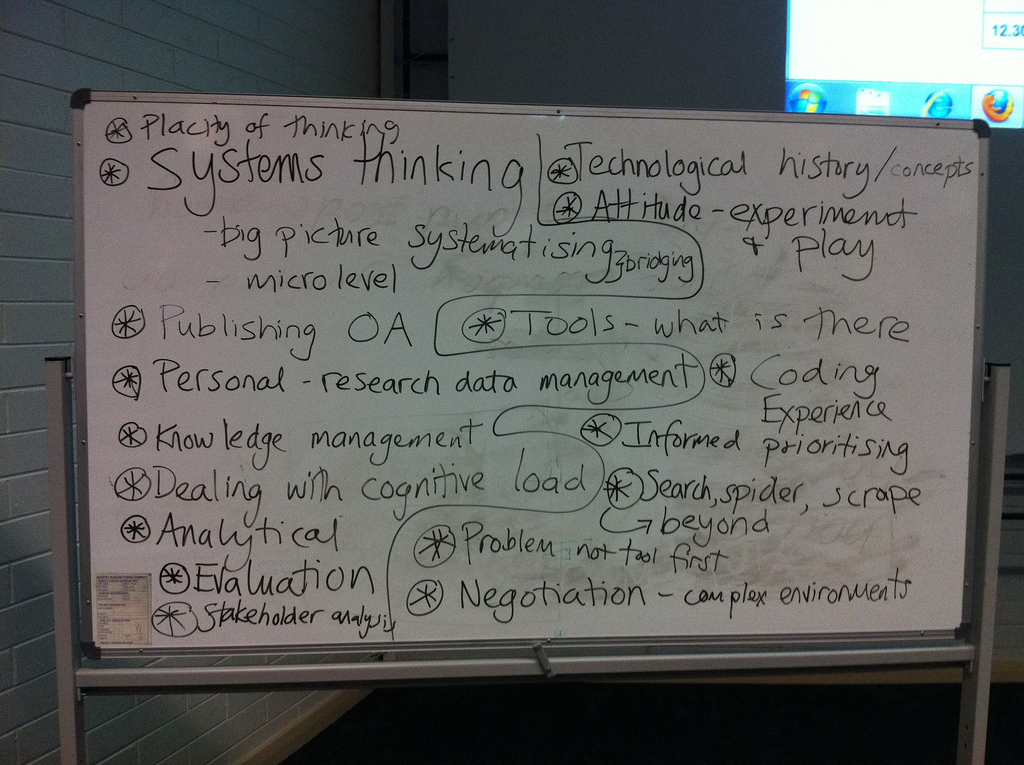
Here are images of the whiteboards that we filled:


The skills listed were:

  • Plasticity of thinking
  • Systems thinking – macro and micro level and able to bridge
  • Publishing using Open Access
  • How to manage personal research data
  • Knowledge management
  • Dealing with cognitive load
  • Evaluation (of technology and projects)
  • Stakeholder analysis
  • Technology history concepts  – to see broad picture
  • Attitude – experiment and play
  • Tools – knowing what is there
  • Coding experience
  • Informed prioritising
  • Going beyond search, spider, scrape
  • Problem not tool first
  • Negotiation in complex environments
  • Requirements analysis
  • Software development methodologies
  • Be prepared to fail
  • Show working out online
  • Being able to display thinking processes online
  • Transparency and sharing with the world
  • Team players
  • Collegiality
  • Openess
  • Algorithm design
  • Programming logic and terminology
  • Principles of programming languages
  • Hands on projects – doing stuff, not theory
  • Writing for all different contexts – online, blogging and formal
  • Critical code studies
  • Pseudocode
  • Rights usage
  • Cross discipline project work – get humanities students working with computer science students so that they know each others’ ways
  • Database principles
  • Playing with coding with Scratch
  • Interoperability of systems
  • Text Encoding Inititative


THATcamp Canberra Day 1 8 October 2011 CoverItLive

Uncategorized

Today I am attending THATcamp Canberra .

The CoverItLive window below is pulling in all tweets from the twitter account @libsmatter and also all tweets tagged #THATcampCBR or  #thatcamp or “that camp canberra”.

Ada Lovelace Day – Little movie of seven women in tech

Uncategorized

October 7 2011 is Ada Lovelace Day – a day of blogging that celebrates women in engineering, science, technology and mathematics.

(If you think that is a bit odd, – yes, the date was in March in previous years.)

In 2010 I blogged about the wonderful Bess Sadler who created the Open Source Discovery Layer, Blacklight – but even more importantly is firmly committed to Open Source as a social justice issue.

Today I was sitting in a session at THATcamp Canberra bootcamp, all about using the Aus-e-Lit’s LORE Firefox Plugin. In a role reversal, the person contributing the humanities subject knowledge to the project was Roger Osborne, while the technologist who coded the project was a younger woman, Anna Gerber. I thought about interviewing Anna (and still would be interested), but then I looked around the room and thought “this event is FULL of women. If they are here, they cannot deny that they are women in tech. I could talk to them. I wonder if they identify as women in tech?”.

So – during the break I found six generous women who agreed to give a quick summary of what they do in tech. I explained to them that I have a lot of women in my introductory technology unit at Curtin University, who may not think of themselves as techie…. but if they listened they may realise that you do not need to know 20 different coding languages to be a woman in tech. Thanks very much for your time Liz, Suse, Janet, Abigail, Cath and Nileshni.

THATcamp Canberra Bootcamp 7 October 2011 CoverItLive

Uncategorized

Today I am attending THATcamp Canberra Bootcamp. I am learning more hands-on about doing interesting things with datasets in the humanities.

The CoverItLive window below is pulling in all tweets from the twitter account @libsmatter and also all tweets tagged #THATcampCBR or  “that camp canberra”.

UPDATE: On setting this up, it looks like the stuff tagged by others is not coming in. Maybe it will take a bit of time….