Library life annual cycles

blogjune

Final marks are in at work. Boards of Examiners to be sat in the next couple of weeks. Online Learning Management System units to be re-jigged and unit outlines to be re-written. Readings and notes to be updated. Same as last year. And the year before.
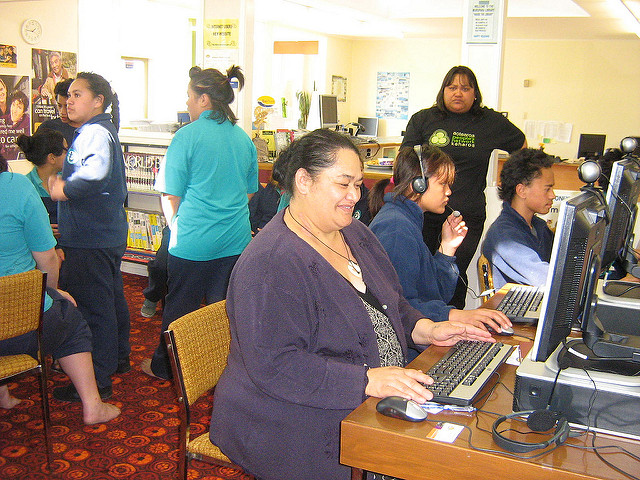
People’s Network. (2009). Busy library. Retrieved from https://www.flickr.com/photos/apnk/4112383147/

People’s Network. (2009). Busy library. Retrieved from https://www.flickr.com/photos/apnk/4112383147/

If you teach undergraduates or postgraduates who follow semester-long cycles, you have a very predictable year of teaching commitments. The first few weeks of semester students don’t realise that they can, actually, do this and often need a lot of help to settle into the unit. Lots of emails. Just when you finish writing the final updates to the teaching materials, the first assessments start coming in. Then there are weeks of marking or moderation, along with releasing material, giving tutes or lectures, or interacting online. Then you see many students who find their feet and grow and learn quite independently,  far more than they had thought they would. The two or three students who, for a multitude of reasons, by this point in the semester need four, five, six exchanges of emails before they have sorted out their issue with the course/assessment/tutor/university/themselves/other students. Then the rush for final marks. Board of Examiners. Repeat…

For academics and academic libraries, the three weeks over Christmas tend to be so quiet that some universities (like my own) actually shut down the campus and ask staff to take holidays then. The last time I moved briefly from an academic library to a public library, which is where I had started 15 years before, I was shocked by the difference in busy-ness. Around Christmas time people who had forgotten the library suddenly materialise and there is demand from kids who are on holidays and people who are on annual leave. When I was a public librarian, this period was only beaten by Easter, where the day before Good Friday people seemed to presume that the library was closing for the next four weeks, not four days, and borrow as much as they could. I never understood this panic-borrowing. I don’t know whether it still happens.

I imagine that corporate libraries have similar ebbs and flows. I can see that parliamentary libraries would have very unbalanced and predictable cycles, with a good dose of “find me everything about this unpredicted thing that is happening NOW” and “let’s have an election” thrown in. Do health libraries have a similar cycle? Geological libraries? I am pretty sure that school libraries would have very similar patterns to academic libraries?

Does your library have a predictable cycle of busy-ness ?
Still blogjuneing …

blogjune

.. but sick in bed today. Just a cold and asthma, but have not slept well for 3 days or so, so am taking the morning off work to snuggle under the covers and listen to the rain outside and try to catch up on sleep. (Also gives my workmates respite from the continuous coughing coming from my office…)

This is a bit like the email that says “Thanks, I got your email”…

Stellar service to a K(C)ath(e)(a)r(ine)(yn)

blogjune

When people ask me whether they should choose my first name (Kathryn) for their baby, I answer “nope”.

There are so many variant spellings, many as common as each other, that inevitably if someone else writes your first name it will be spelled wrong. Your options are then to:

  1. Correct the spelling and feel like Ms Pedant from Pedantville
  2. Not correct the spelling and feel like you are vaguely deceiving them

Of course, there is 3. “Just get over it”, but it’s not something I have been able to do.

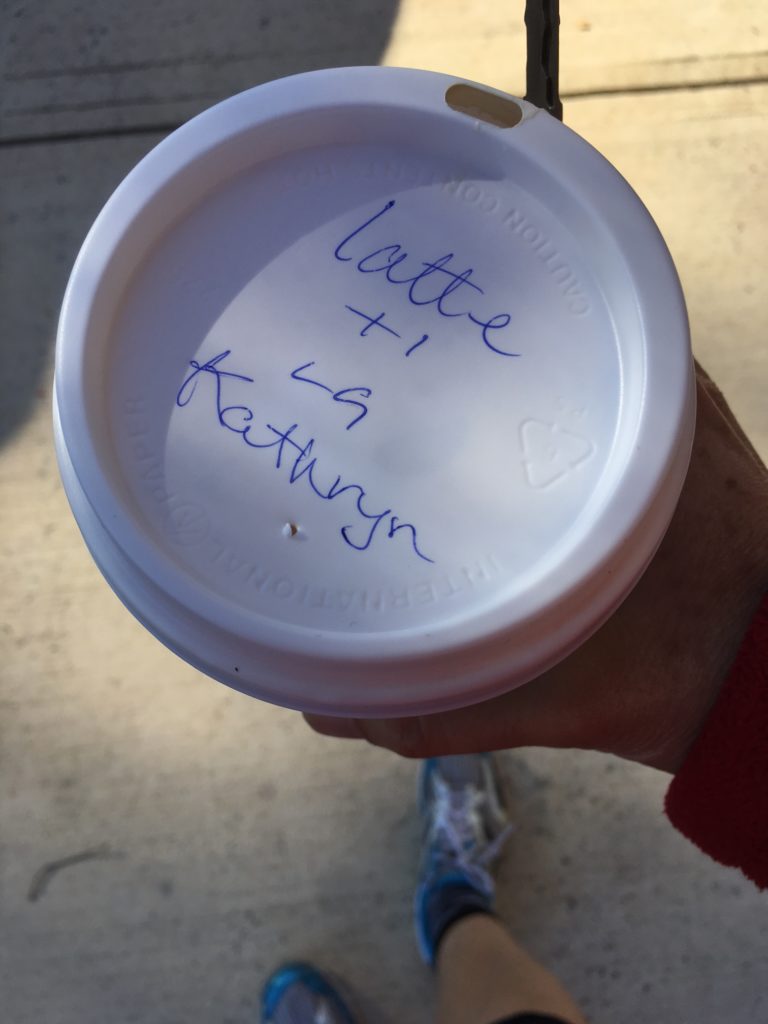
This morning I ordered a latte at my usual Saturday morning place and was served by a young woman who had just started working there. As she took my order she wrote on the top of a lid “Latte +1 Lg Catherine”.

When I received my mug, however, this had been changed to “Latte +1 Lg Kathryn” (spelled the way I spell my name). I wondered aloud whether the barista had changed it. (As far as I knew, I had always taken approach number 2 in this coffee shop …)

Nope – the woman behind the counter had. But, how had she known? She said that she had seen the way my name was spelled on my credit card and then made the change before handing the lid on to the barista.

A small act of empathy than really went a long way toward putting an upward kick into my morning 🙂


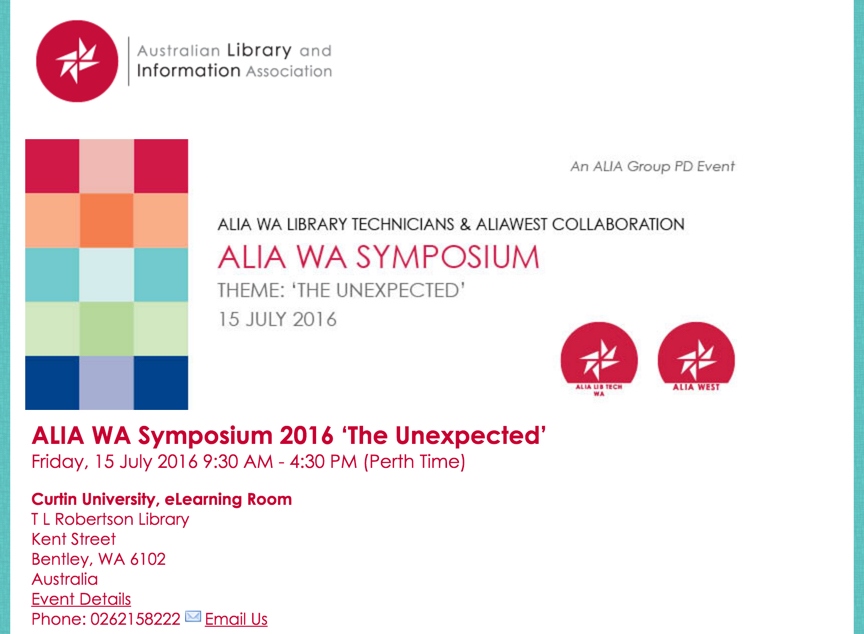
ALIA West Symposium 2016. You should go.

blogjune

I won’t be in Perth for this, but you should go ahead and pay just $75 for an excellent day of Professional Development …

ALIASymposium


Registrations are now open for the ALIA WA Symposium 2016. All library and information professionals are invited to attend this full day PD event. Hear about and discuss some of the exciting ideas and activities that are happening in the WA library community under the theme of ‘The Unexpected’

The Symposium will be based on a ‘flipped’ conference model to encourage discourse and ideas. Papers will be provided to participants before the event to read and form ideas, opinions and questions. On the day of the Symposium, each speaker will give a short recap of their topic and a facilitated panel will be used to discuss the content.

Keynote Speakers

Megan Rosenbloom, recently named as one of ALA’s Movers and Shakers of 2016, Megan is the Associate Director for Collection Resources at the Norris Medical Library of the University of Southern California in Los Angeles. Megan has served on the editorial boards of the Journal of the Medical Library Association, and the Archivists & Librarians in the History of the Health Sciences. Megan is also actively involved in a number of ways in the Medical Library Association. Megan is the director and co-founder of Death Salon, events that bring together intellectuals and independent thinkers engaged in the exploration of our shared mortality by sharing knowledge and art. Megan is member of the multi-disciplinary team ‘The Anthropodomermic Book Project’, which is working toward identifying and scientifically test, the world’s alleged books bound in human skin.

Dr. Jack Sargeant is a writer specialising in cult, underground and independent films, as well as subcultures, true crime, and other aspects of the unusual. In addition, he is a film programmer and an academic. Jack has written and contributed to numerous books on underground film, including ‘Deathtripping: The Cinema of Transgression’. The book is about Cinema of Transgression filmmakers, such as Richard Kern and Nick Zedd, Naked Lens: Beat Cinema, and Cinema Contra Cinema, a collection of essays on alternative film. Since 2008 he has been Program Director for the Revelation Perth International Film Festival.

For full details of speakers on the day please see the ALIA West blog http://aliawestbiblia.blogspot.com.au/
When: Friday 15 July, 2016
Time: 9.30am-4.30pm
Where: Curtin University: Curtin University eLearning room (under Curtin Library) Building 105.107

Costs: 

ALIA Member – $75.00
Non ALIA Member – $100.00
Student – $50.00

Morning and afternoon tea, and lunch will be provided.


Registrations are open now: https://www.regonline.com.au/aliawasymposium2016


Registrations close Friday 8th July, 2016 

Here is a baby rhino … and a life parable…

blogjune

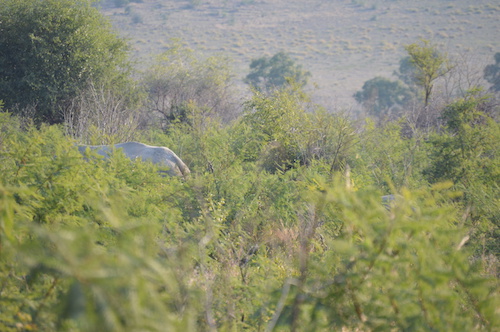
Last week when I went animal spotting in Pilanesberg National Park ,about four hours in we drove over a ridge and saw our second rhinoceros of the day. Far off in the bushes. With a tiny baby rhino behind her.

I spent about 20 minutes trying to get a clear shot, and this is the best one of the bunch. See the tiny grey rock on the right, behind the big grey rock on the left? Baby rhino.

MumandBubRinBushes500

You never, ever, ever get out of the car in a national park full of wild animals in Africa.

Charmaine very nicely suggested that I may want to hang out of the passenger window and lean on the roof, with my feet on the seat, to try to get a better shot. I was very glad to have spent some time doing situps in the gym because this is the position I struck for 10 minutes or so, trying to get my shot.

Eventually, we decided that we would have to just leave it and drive on…

So, five minutes later.  About 1 km down the road. This pair crossed right in front of the car..


BabyRhinoLooking500px

And.. in the next half hour we saw another two rhinos, making it seven in the whole day.

Thing is, if we hadn’t spent the twenty minutes or so trying to photograph the first mum and bub pair, then we would not have been in the right place at the right time to see the second pair so clearly.

Just when we had concluded that all our efforts were fruitless, exactly what we had wanted was in front of us – but if we hadn’t spent all that time trying then we wouldn’t have had the opportunity.

Or – random stuff happens all the time and often it’s lovely…

MumNBubWalking500

Top 5 skills for future proofing a librarian’s employment opportunities

blogjune

Apologies for the clickbait headline, but I am genuinely quoting the question..

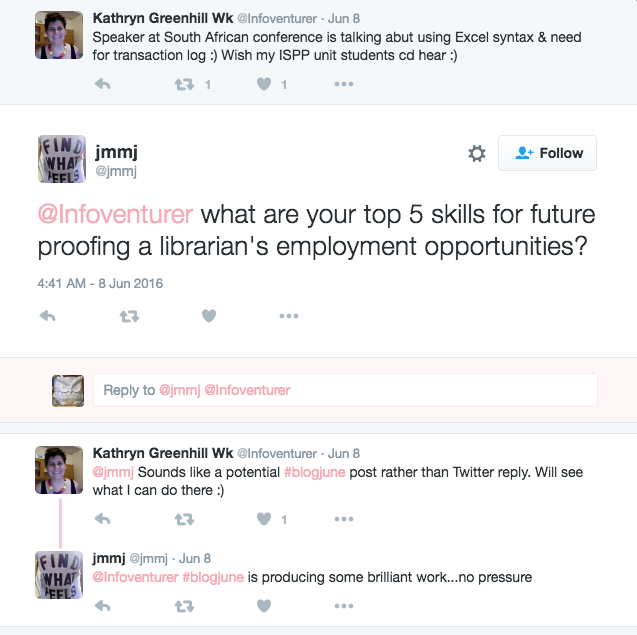
Last week, @jmmj asked me via Twitter “What are your top 5 skills for future proofing a librarian’s employment opportunities ? ”
Screen Shot 2016-06-14 at 7.52.36 pm

Yes, I teach new librarians, so I should have some kind of idea.

But, please note, I do not have any kind of personal professional development plan of the type that Alisa and Sam have shared this #blogjune. I’m pretty much in awe of this kind of organisation and professionalism… so do have a look at what they have to say about what they are doing to future proof themselves.

Skill 1 – Know your library stuff inside out – from first principles

Really, to continue to be useful in a library you must, must, must have an idea of basic principles of selection, organisation, preservation, provision, access and social life of information. Full Stop.

Not only that, if you have a good grasp of the WHY we do what we do how we do it, then you can critique what we do, improve on it and understand how to extend it into the future.

Reading something like Matthew Battles’ Library an Unquiet History should make sure you have an idea about the WHY from which all our HOW flows.

Skill 2 – Turn up, do things you say you will on time, wash, be kind and pleasant, don’t piss off your coworkers, boss or clients

I know it sounds basic and obvious, but knowing enough to hand code your own discovery layer will not help you stay employable if you have a history of being difficult to work with.

I am actually serious with this one. I have worked with a few people in the past who had great technical skills but were unreliable or expected other people to carry the boring bits of the job while they did the interesting bits and made a name for themselves professionally.

It’s really about cultivating skills at being a supportive team player and showing humility and consideration.

Skill 3 – Learn and relearn

Alvin Toffler, Future Shock 

“The illiterate of the 21st century will not be those who cannot read and write, but those who cannot learn, unlearn, and relearn”

Skill 4 – Look outside the library

Know how to cultivate relationships with useful people within your organisation who do not work in the library. Go to conferences or read literature from other professions like designers, IT professionals, educators, marketers or archivists. Understand their ethics and how they differ from those of our profession. Talk to people in other libraries about how they do things. Look at what is happening in libraries in other countries. Try to cultivate partnerships with people in other organisations, both for your own learning and on behalf of your library.

Skill 5 – Follow your passion and cultivate interest and curiousity.

Go after what floats your boat and try to get a job doing that. Make sure that lots and lots of things float your boat and maybe – if it seems like your interests are so narrow and specialised that you cannot see how to bring them into the workplace – you need to actually cultivate a wider interest and try out more things;  or actively try to like more things.

Being passionately interested in something makes you naturally want to find out more and to share what you know and to help others. These qualities are invaluable in a library.

What would you add to the list?

Storify of tweets from SAOIM2016

blogjune

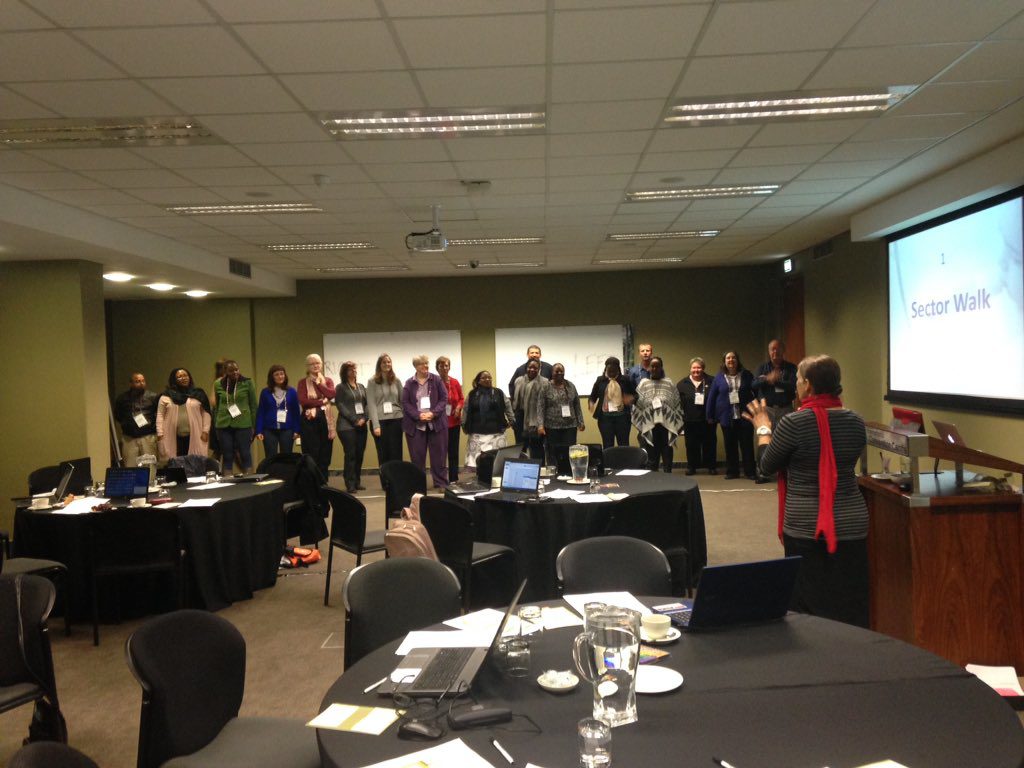
The workshop for SAOIM2016 went fabulously today, but I will not post the photos until I am back in Australia. Pavlinka took the one below 🙂 The workshop participants made it what it was, and they were very, very generous with sharing their expertise.

SAWorkshop

Really, Ruth, I did not copy you by playing with Storify  .

Anyhow. I have fed all the tweets with the #SAOIM2016 hashtag into Storify, and here is what people have to say, SAOIM2016 Storify. I added some manually, but did not remove the duplicates and retweets.


Keynoting SAOIM 9 June 2016

blogjune

Had a great keynoting session, talking about how to maintain enthusiasm and make sense of new ideas from a conference once one gets back to the library. Ironically, I am a little brain-dead after this, so do not have a lot of energy to blog a lot today.

I riffed on Mitchell Whitelaw’s idea of “generous interfaces” from the article below, speculating that we maybe can focus on generosity as a way to share what we are learning, so that knowledge and networks are strengthened in the profession.

Whitelaw, M. (2015). Generous Interfaces for Digital Cultural Collections, 9(1). Retrieved from http://www.digitalhumanities.org/dhq/vol/9/1/000205/000205.html.

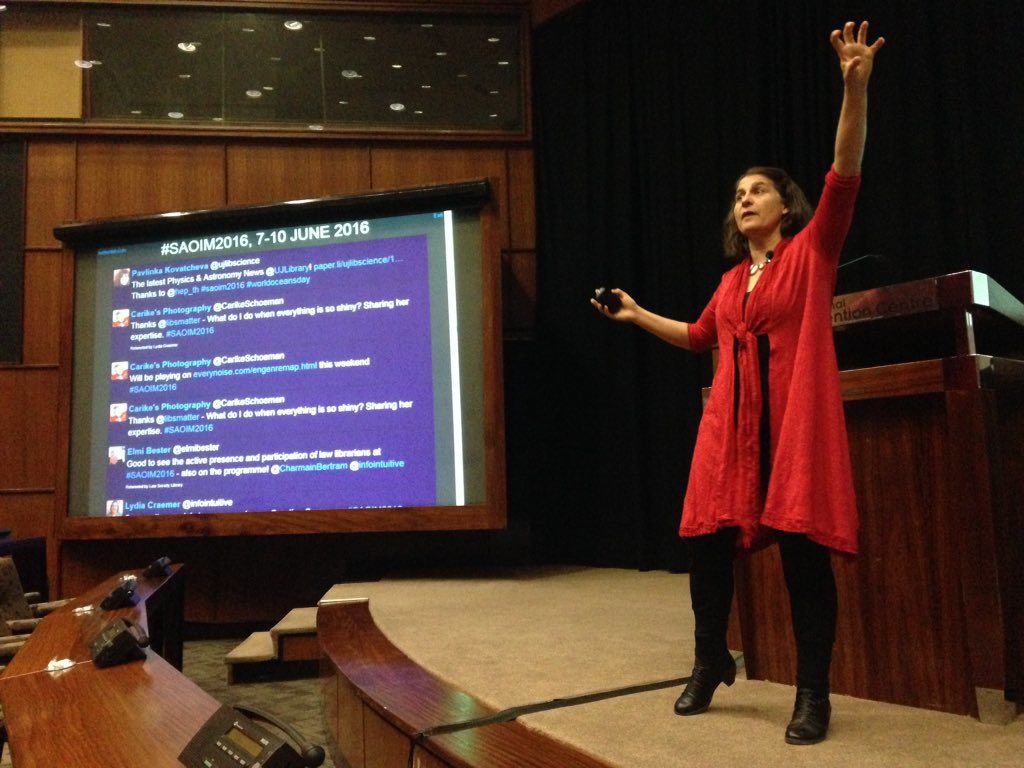
The photo below was posted by Pavlinka Kovatcheva .  I would like to say that it is a totally atypical pose for me. But can’t. Rachel and several others will be impressed, however, that my hands are actually in focus and not a blur.


Knoting