Friends of the Library Ideas Series, Selling on eBay Part 1

Uncategorized

Library work is great when you can sit in the evening in the middle of 30 totally engaged community members with a glass of wine in one hand and a piece of Lavosh bread with brie in the other. (Well, wineglass of orange juice, but the community members had red or white 🙂 ).

It started with a library member who was decluttering her house and asked us to provide a session on eBay. I spoke to Accredited eBay Trainer – and former librarian – Julie Martin who had done some sessions for University of Western Australia Extension. We decided that she would offer a two hour introductory session about eBay and then follow it by a four hour workshop over two weeks all about selling on eBay.

You know when you take a punt and it turns out much better than you expected? Julie has been like that – full of richly detailed and fascinating stories all about eBay. The friend who sold ticket stubs to a 1966 Beatles Concert in Adelaide for $280, the boy who advertised his “max wicked sick BMX” one that “did boom gnarly stunt tricks & girl got pregnant just watching” , the husband who bought a gift for his wife – only to discover that she was actually the seller….

Our Friends of the Library have been sponsoring the sessions each Thursday night in May. Last week, Julie did a session called “Fun Family Fotos” where she showed people how to find out who was in family pictures and how to preserve and store the pictures. We were able to advertise our newly digitised Community History collection as part of the session. We have branded the sessions as the “Ideas Series” and at each session given out forms to participants, asking them what other speakers and workshops they would like in the new building and whether they would like to join the Friends of the Library. I’m really excited about running a regular “Ideas Series” after we move in August – especially if we get numbers as large as this time – 50 people on the waiting list…

I tweeted the session and fed it into a CoverItLive window so that I can embed it on the library blog tomorrow. I’ve used eBay as a buyer several times, but I found I learned an incredible amount in Julie’s session tonight. Here’s my notes:

Library Futures – at State Library of Western Australia and UTS

Uncategorized

I’m excited.

After dropping the kids off, I’m going to Necessity is the mother of (re)invention: the future for libraries at the State Library of Western Australia today. I have heard two of the speakers before. Both were excellent and are why I’m going today.

I saw Dr Varapasad of the National Library Board of Singapore at speak at VALA 2008. I also saw him speak to the excellent  Bridging Worlds conference later that year and had a chance to tour the National Library. I loved the promotional displays with large cardboard cutouts of library staff next to heart shaped pieces of paper where users told their stories about why they <3 their library.

Singapore National Library Uploaded to Flickr on October 29, 2008 by jblyberg

I met Axel Bruns from QUT when we both spoke in the same session at Cultural Connections: MySpace is an ArtSpace:ARLIS/ANZ Biennial Conference in Brisbane in 2008. In fact his talk today, Oureach and Co-curation: engaging with library users is an update of that keynote and the slides have been posted online already.  If you have seen me speak, there is usually a slide in there with a guy with a speech bubble coming out of his mouth talking about the concept of “produsage” – the idea that in order to use and engage with much new media you also need to be a producer in the system. That’s Axel Bruns.

The other speaker is Frank McGuire the founder of Global Learning Village and a member of the Hume Global Learning Village Advisory Board at Hume City.

If I can get wifi access I will tweet is via @libsmatter and pull the tweets into the CoverItLive window below.

If you have not had enough Library Futures, then check out the CoverItLive from the University of Technology Sydney second staff Futures Day. Part one a month a go was wholey staff driven and enough was pushed out via the twitter  to make today an interesting day to watch – I liked the idea of a small bar in the library. You can follow the day via the twitter hashtag #plff2010 or view reports of the day in the CoverItLive session starting at 1pm AEST http://bit.ly/aUcEgU.

UPDATE: The tag for the UTS day is actually #libpd.. The other hashtag is actually for yet ANOTHER future library talk that the UTS staff are giving at the State Library of New South Wales today..

Libpunk – doing it for itself

Uncategorized

First there was my rather tongue-in-cheek post in June 2008 about how DIY-anarcho-librarianship could be called Libpunk if those educators were going to start spouting off about Edupunk, Steampunk, Edupunk, Libpunk? .  I gave a list of examples of library folk doing it for themselves and not waiting to be handed tools or permission, and because I had to come up with something I defined Libpunk as:

Librarians using non-proprietary products and groupings not based on institutional alliances to practice their craft and communicate their practice.  Open, collaborative enterprises based not on making money, but often on increasing social capital or extending knowledge

Then Amy Buckland offered to make me a Libpunk sticker for my laptop, so the Libpunk Cafe Press store was born. I’ve seen a couple of the products in the wild, like Stephen Francouer in New York’s  messenger bag and Krista Godfrey in Canada’s  laptop ..which made me smile..

Ann Gambles in the UK riffed on Libpunk in a slideshare presentation she did just for fun, Libpunk0.01 .

Then a mob of library school students were a bit excited about the whole idea and started a Libpunk wiki, but there is not a lot on it. And there is this Czech Libpunk wiki page that I have no idea about : )

The idea sat around in its dark shaded bedroom in an adolescent funk for a while, but it’s finding its voice again and morphing (yay!) with the new Libpunk Radio Show that started last week, the Libpunk Friendfeed room and the Libpunk Twitter account.  Sarah Glassmeyer and Kendra K are the energy behind the empowering and snotty upsurge, but they are not alone, with more people joining in during the last week.

If you want to do some do-it-yourself definition of what Libpunk may be, go and enter the Libpunk Essay Competition on the Libpunk.info site – except it’s not really a competition, but like , totally is … and you could even do an interpretive dance instead …anyhow according to the site the aim is to “figure all this shit out”…and whichever way you choose to do it can only be right …but …

Just.get.out.there.and.do.it .  Don’t wait around for someone to tell you it’s OK – poke, prod and dream and make your own path then share…

Barcamp Perth, Saturday 10 April 2010

Uncategorized

I’m going to miss Barcamp Perth this weekend, but that is no reason why you should. The venue, Central TAFE is the best unconference space I have been in – central, great facilities and free wifi that just works without you having to jump through hoops or whistle Waltzing Matilda while standing on one foot. The people who turn up to the event are usually very interesting, friendly and enthusiastic – and the event even has its own barista-in-residence.

Here are the essential details:

BarCamp Perth 2010 will be held on April 10, 2010 at the Central Institute of Technology in East Perth.

Setup will be from around 8am, with registration (getting your name badges etc) from 8.30am. We’d like to kick off with a welcome oratory at 9am or just after as we end up delaying the schedule a fair bit otherwise (Matt just loves to rabbit on).

There will be Five Senses Coffee shots being pulled, so there’s certainly something to keep you going if you get there a little early – plus, we’d love your help getting things setup!

Sessions usually run for 30 – 45 minutes. Calls for session topics will go out soon as we’re hoping to have a magically online system this year with some soon to be revealed features.

The list of talks is already looking very interesting. Heads up to Aaron Trenorden from Murdoch University Library who will be presenting about setting up a vanity feed. Aaron has a very down-to-earth presentation style that lets him take details up a notch technically without the listener realising they have learned a lot while they thought they were just enjoying a friendly and casual chat. It will be well worth catching his session. I’m really sorry that I won’t catch the session about Open Source at the Australian Bureau of Statistics too.

LibX toolbar for Curtin University Library

Uncategorized

Frustration is the mother of motivation for me today.

I’m in the final stretches of my thesis and am doing a further literature review.

I wanted a LibX toolbar to make my research quicker and easier, but the library at Curtin University where I am studying hadn’t built one.

LibX is so magically, wonderfully useful to me as a researcher, that I took a couple of hours and used the LibX Edition Builder to create a LibX Toolbar that works for Curtin University Library. It is here, LibX Unendorsed Curtin University, Western Australia

I needed to look carefully at the way the URLs were built for their SFX link resolver, their Ex Libris catalogue, and their authentication server, but once I had that figured out it was just a matter of plugging info into a few blanks and testing, testing, testing.

THE “SO WHAT?” OF LIBX FOR ME

With the LibX toolbar installed in Firefox, if I get to an article from the web on JSTOR or any other publication to which my uni library subscribes, I can just right click on the page, enter my student number and password and get to the full text. I can even click straight through to full text articles from the references in Wikipedia.

LibX also:

  • lets me search the library catalogue or federated search straight from the toolbar of my browser, without having to go to the library catalogue page.
  • hotlinks ISBNs anywhere on any web page so that when I click on them, it will show the work in my library catalogue.
  • inserts an icon when I browse Amazon.com that lets me click to see whether the item is in the library.
  • For journal articles mentioned anywhere on a web page, it highlights the identifier, and I can click through to the link resolver (SFX) and go straight through to full text of the article if it is in the library.

I can also drag and drop any text from any page that I am on into the catalogue search box or on to a Google Scholar search box and have it search for that text.

DISCLAIMER

This in no way replaces a thorough, scholarly hard-slog database search, but it does make the casual “presearch” process a lot, lot faster and easier – and makes me a lot more likely to use the resources of my library because the library is in my space instead of me having to go to the library’s space.

I’ve emailed someone at Curtin Library to give them the heads up that I have created it…

VALA 2010 Report back session 20 April 2010

Uncategorized

A mob of librarians who went to VALA 2010 will be reporting back to Western Australian library folk on 20 April . I’ll be there and sharing some of My ten VALA 2010 takeaways

>>>>>>>>>>>>>>>>

via Biblia,

VALA 2010: Report back session and panel discussion

Did you miss the VALA 2010 Conference and Exhibition back in February?

Don’t be dismayed! ALIAWest invites you to attend it’s VALA 2010Report Back Session and Panel Discussion on Tuesday 20th April, where you can hear from some of WA’s delegates to the conference. Come and listen to Kathryn Greenhill, Sue Cook, and Constance Wiebrands – all of whom presented at the conference – as they provide a short redux of their papers and share with us the impressions they received, the trends they observed, and other highlights they witnessed at this exciting biennial conference about the use of technologies in libraries. Students are especially encouraged to attend!

Remember that ALIA events are always a great opportunity to keep in touch with colleagues and to increase your professional network. We hope to see you there! Please RSVP Ms. Linda Papa (contact details below) by Friday 16 April if you would like to register for this event. Refreshments will be provided.

Date: Tuesday 20 April 2010
Time: 5:30pm for a 6:00pm start
Location: Level 3 Seminar Room of the ECU Mt Lawley campus library
2 Bradford Street, Mt Lawley W.A. 6050
Cost: $11 ALIA members
$16.50 non-members
Free entry for LIS students and 2009 LIS graduates
RSVP: Ms. Linda Papa
E: lindapapa(at)bigpond.com

Futures Dreaming at Ark Libraries 2.0 Masterclass

Uncategorized

The last exercise for the day today was a “Futures Dreaming” , where the group came up with some ideas about the library of 2020.

We used the same questions as we used at Library Camp Perth 2009 in September – and it is interesting to compare the ideas from both groups. It is very clear that librarians need to be able to market, self-promote and get better with IT. As in September, the conversation leading up to each point going on the board was more interesting than the points that ended up there…

The questions were:

  1. What would you do in your library if you had all the time, money and skills you needed?
  2. What will the library of 2020 look like?
  3. What skills will librarians need for the library of 2020?
  4. What will we need to drop as we move to 2020?

Here are the answers. Feel free to click through to the images to leave a note on Flickr about points you agree or disagree with.

What would you do in your library if you had all the time, money and skills you needed?

ANSWERS:

*Storytime every day
*More social space/seating space
* Electronic resources with remote access – all of them, no need to make a choice.
* All archives digitised and mashable
* Time/resources to build projects
* Avatar to do things for us
* Be embedded in users’ space, but not in their face
* Be proactive not reactive
* A federated search that intelligently refined the search before retrieving results
* Maps and guides to the collection automatically downloaded to users’ mobile devices when they walked in
* More personalisation for users – the automated system knows about them and serves them better using this
* One library card for all libraries
* More 24/7 services
* Better translation and translation tools for searching
* Staff to do marketing and budgeting and an IT developer
*More IT people who live in the real world.
* Intelligent robot/virtual assistant to do boring scut work

What will the library of 2020 look like?

ANSWERS:

* In public libraries – more social spaces
* Fewer libraries being built
* Academic libraries becoming a “licensing centre”
* Libraries with a bigger role for literacy for the nation
* Need to form partnerships with other agencies
* Need to argue harder for print budgets
* Library and knowledge managers to merge
* More IT skills needed for library staff

What skills will librarians need for the library of 2020?

ANSWERS:

* Web design and development

* Communicating skills (eg. writing for the web)

* IT troubleshooting for ourselves and our users

* Political savviness

* Marketing skills

* User Experience skills – online and in physical spaces

* Links to other professions

* Critical thinking

* People skills

* Searching methodology

* Understanding metadata – formation, standardization, repurposing

* Business acumen

* Project Management

* Like being with people

* Ability to self promote, regardless of who to

* More young men in the profession

* An image change

* An understanding of learning styles

What will we need to drop as we move to 2020?

* Duplicate cataloguing – if we keep as many cataloguers get them to work together across organisations

* Bulk circulation

* Static collections

* Books

* Forms and other paperwork

* Perfectionism

* Fear of failure

* Committees

* Reinventing the wheel

* Emphasis on text

ARK Libraries 2.0 Masterclass 2010 backchannel

Uncategorized

Michelle McLean and I are facilitating the ARK Libraries 2.0 Masterclass over the next two days.

We have set up a backchannel to give the participants an idea of how this can work.

HASHTAG

So that people can easily find references to the event, we have decided on a hashtag that we are asking people to use for anything they post on the web about the workshop #arklib2010

TWITTER

One of us will be tweeting while the other is talking. Feel free to follow and talk to Twitter user @ARKlib2010 .

TWAPPERKEEPER

Twitter does not archive tweets, so I have set up: :

COVERITLIVE

I like to go back to read my tweets about events on my blog, so I am adding CoverItLive windows here. They will pull in tweets from Twitter user @ARKlib2010 and my personal account @libsmatter . I can also add separate commentary into the window and can insert video and images. People watching the window will see live updates as new tweets are added as well as be able to ask direct questions in the chat on the side of the window.

ARK Libraries 2.0 Masterclass Tuesday 30 March 2010

ARK Libraries 2.0 Masterclass Wednesday 31 March 2010

Ada Lovelace Day : Bess Sadler

Uncategorized

Today is Ada Lovelace Day – an international day of blogging to  celebrate women in science and technology.

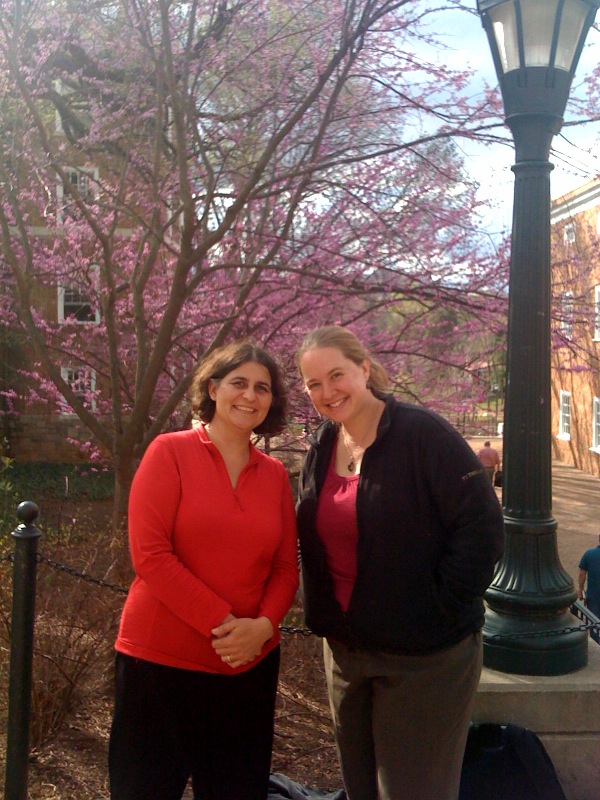
Last April I was lucky enough to spend a couple of days with Bess Sadler at the University of Virginia while I researched libraries that created their own Open Source Software. Bess was the Chief Architect for Blacklight, which the project home page describes as:

a free and open source ruby-on-rails based discovery interface (a.k.a. “next-generation catalog”) especially optimized for heterogeneous collections. You can use it as a library catalog, as a front end for a digital repository, or as a single-search interface to aggregate digital content that would otherwise be siloed.

This woman codes. And loves libraries. And tries to make a more balanced world where all people have access to information, not just people in rich nations.

Bess was a great host, inviting me to sit in on a library staff meeting about error reporting for Blacklight so that I could get a feel for how the product was being received and how the library staff regarded it. She also took me out to a Ruby on Rails night in a co-working space with pizza and wifi – not everyone’s idea of a fun night, but the normalness of just hanging out with everyone in front of a laptop was just what I needed at that point in my trip.

I was impressed by Bess’ very straightforward and clear view of what she does. Without being in any way dogmatic, she was so committed to Open Source as an effective and fair way for a community to pool assets. When I asked most of my research subjects about the positive aspects of open source for their projects, they often hesitated or qualified their answers with “but in this case it’s like this, but in this other case, it’s like this”. Almost without pause Bess was able to list all the advantages I had collected from literature, give concrete examples of how they applied with Blacklight,  and then more.

I was very struck by Bess’ belief that people in countries with means to develop software should be sharing this software with people in poorer nations. She described access to information – particularly information created and relative to a poorer country – as an essential resource and a right for people in that country. She pointed out that without tools to access and organise this information , or the abilty to afford subscriptions to databases with research produced by the country, then citizens were being denied a right that everyone deserves.

Bess told me the story of another remarkable woman in technology, Dorothy Eneya who worked as a systems librarian in Malawi. The University of Malawi had a proprietary library system , but no money to pay for further licenses. It was faced with shutting the system down and providing no circulation or discovery system for the University. Dorothy Eneya did not accept this. She was the driving force behind installing the Open Source library software, Koha.  This is the difference that Open Source can make to access to information in some countries.

Bess also told me about the work of EIFL.net, (Electronic Information for Libraries), an organisation in which she volunteered. It describes itself as an organisation that offers “range of programmes and services designed to enable access to knowledge for education, learning and research and access to knowledge for sustainable livelihoods“. Much of the work is library focused and working with libraries in developing and transitioning nations, with programmes like “Library in a Box” – a package of software that provides an Open Source solution for library automation. They help libraries pool their resources to acquire consortia pricing for online databases. They also promote professional knowledge exchange.

Bess also gave me a new way to communicate with librarians about Open Source software, and why not to expect it to be  “finished”. She likened development of a discovery layer to collection development. “You never get to a point when developing your collection where you can say “that’s it, we don’t need any more money, the collection is finished” – so why should you expect this of your discovery layer?”.

Personally, it was a delight to spend a couple of days with Bess Sadler. Professionally it was an inspiration to see a gifted coder who was able to work out how to use her skills effectively , communicate her passion and help me better realise why Open Source is important and worthwhile. Thank you, Bess.

A flooded library…

Uncategorized

I hope never to see this in a library where I work – and so do you…

Heavy storms hit Perth tonight, with over 47mm falling during the storm – after around 120 days with only 0.2mm during one day . Twitter user Muzafar Tufail posted this image of the damage to the University of Western Australia Faculty of Architecture, Landscape and Visual Arts Library , Library at ALVA UWA.

We drove home in a hailstorm and Mr7’s bedroom was flooded after our gutters overflowed – but at least we did not have golfball sized hailstones or apocalyptic  noise like in Drew Robinson’s office in Nedlands, just down the road from UWA.

Seeing the photo reminded me of Michelle McLean’s experience in Victoria in November with a library flooding experience and then one week on .  The flooding experience lasted just 10 minutes and involved librarians pushing the wheeled shelves away from the area of damage. (Note to self: I thought we were getting wheeled shelves in our new library for the flexibility they offered the space, but can see another compelling reason now.)

I know that Greg Schwartz and his staff at the Louisville Free Public Library worked to the point of exhaustion recovering from the flood in May last year that did over $5 million worth of damage to over 500 000 volumes and three bookmobiles.  I had not looked at a photo of the outside of the library during the flood before , but really,really never want to see this happen to any library:

Credit: http://www.atyourlibrary.org/whats-wednesdays-library-flooding

I’ve been jolted into including a bigger section about disaster recovery in the digital strategy I’m currently writing for our library.  If you are in a similar situation, I would recommend the Australian Library and Information Association’s  17 page Guide to disaster planning, response and recovery for libraries that was prepared in November 2009 after the Victorian Bushfires .

UPDATE 8:51pm – From this tweet from Amy Hightower, it looks like all the libraries on the main campus of UWA are water damaged:  “…water in *every* UWA library but Med. EDFAA is knee-deep in mud, and has the same level of water on top of that” .