Community long table Blogjune 2019/21

Uncategorized

I settled in my suburb because community is a little more central here than in many other places.

It was built following “Garden Suburb” principles, aimed at giving soldiers returning from the Second World War a community to raise families. Most houses were located within walking distance of one or two parks or green spaces, houses are set well back from the road with wide green verges and generally are modest and timber-framed within ample yards. Many, like my family, now live in infill housing in what used to be gloriously large suburban back yards.

Streets curve with easy sight-lines instead of being laid out in a grid, and radiate out from a central oval block at the heart of the suburb containing:

  • a primary school
  • a large permaculture housing collective
  • Aboriginal kindergarten
  • kid’s playground
  • senior’s village
  • community garden
  • child health centre
  • Police and Citizen’s Youth Centre
  • toy library;
  • and a very understated community hall that was built with money raised by the local Progress Association in the 1950s.
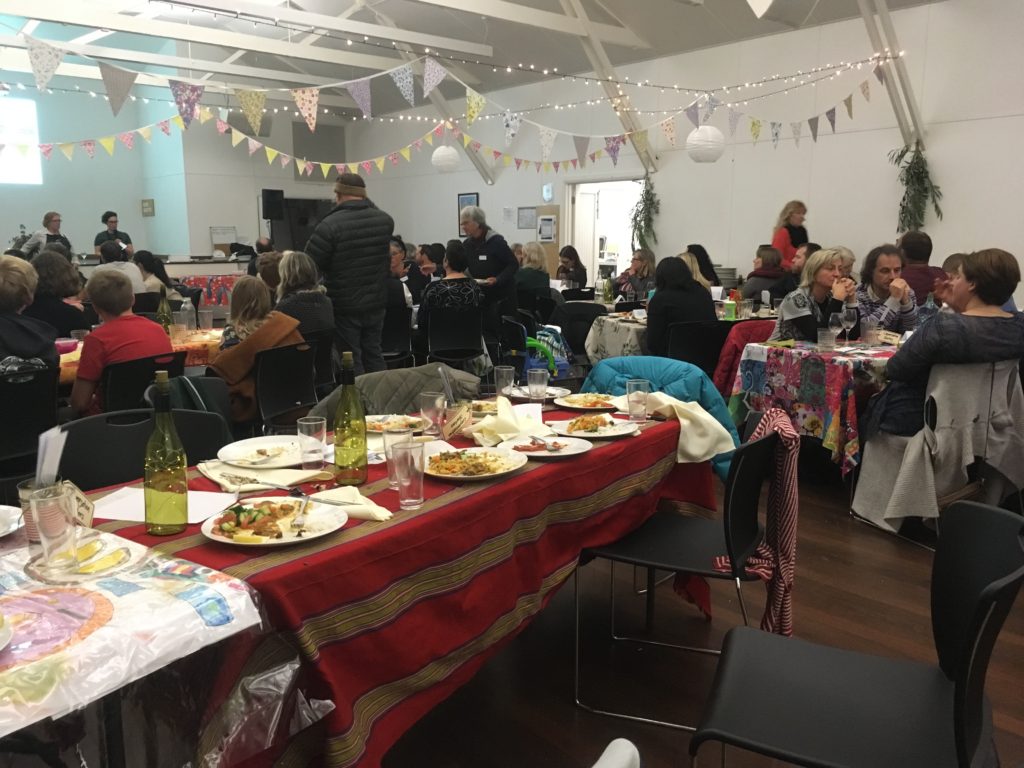
So, it should surprise no-one that last night I walked down to the community hall with my adult son and shared a fabulous community long table meal with my neighbours.

Called “Cooking from Home Community Dinners”, a group of nine people from different cultures had earlier completed a course at a local neighbourhood house where they learned to cook each other’s favourite traditional dishes. This was food that was maybe comforting as a child, or unique to their culture, meals that they do not necessarily have occasion to share every day since they have been in Australia.
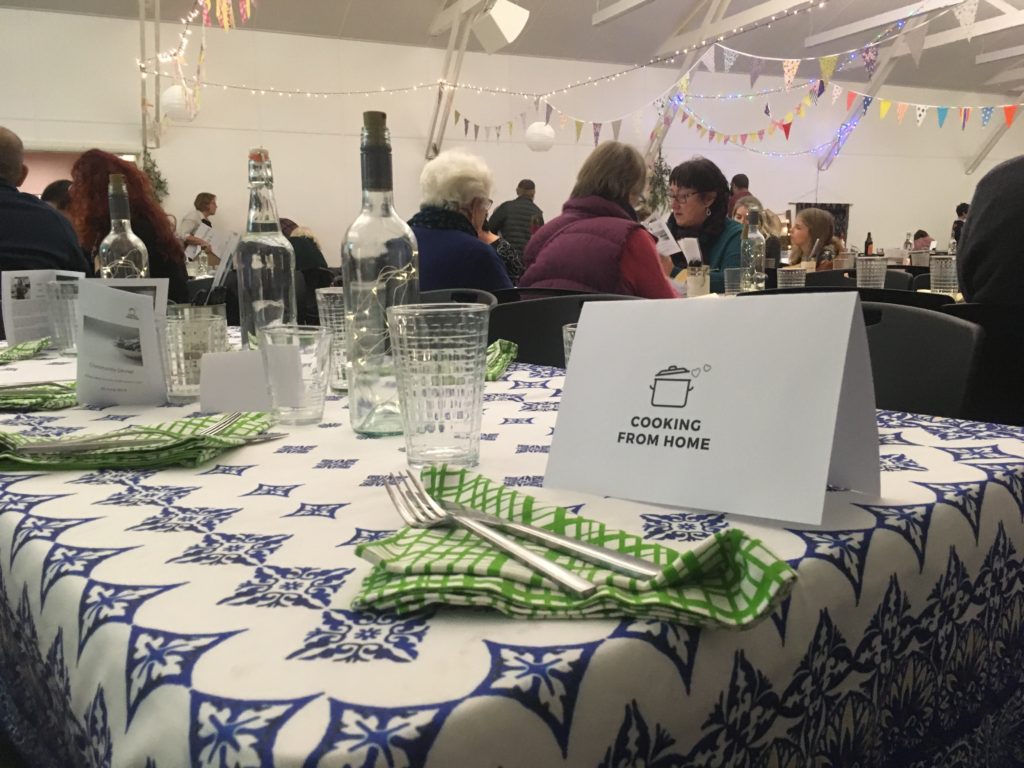
Over three nights in the last three months, the group has worked with a chef to serve a feast of selected dishes to the local community. We get to hear the stories of love behind each dish. And to sit with strangers and neighbours and maybe talk about the food-inspired questions to share our stories. “Who is the best cook in your household?”, “What was your favourite food as a child”, “What is your cultural background and do you practice any traditions now?”
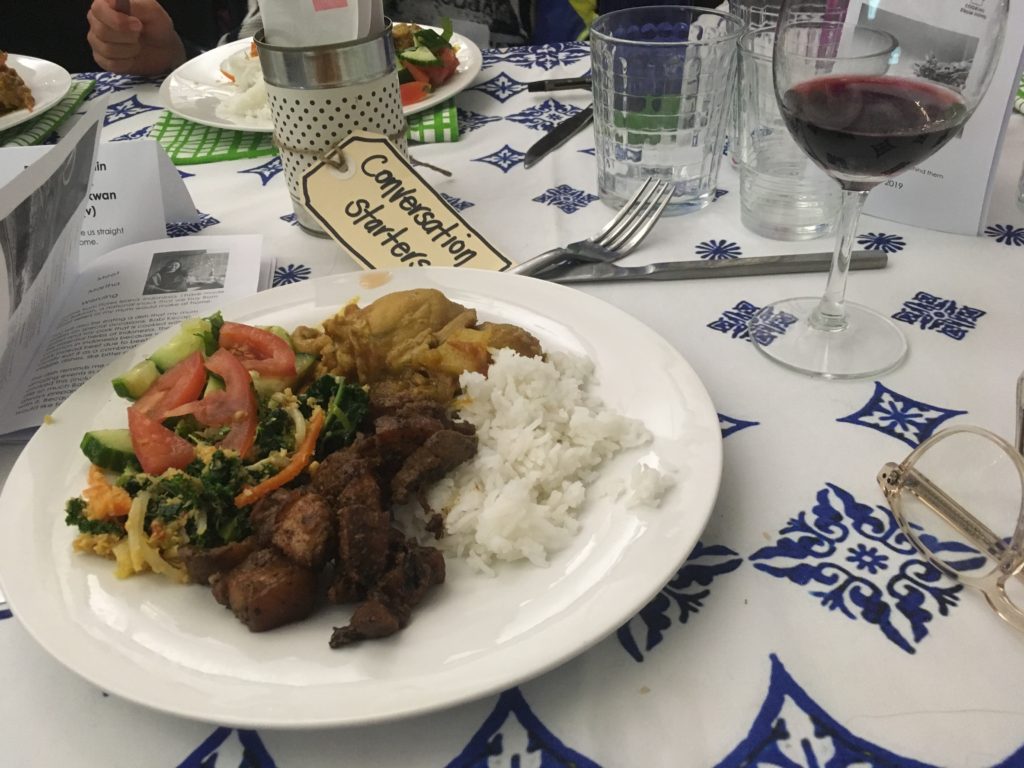
In the last Federal election, 30% of voters at the local primary school voted for the Greens (compared to 16% for LNP), so this was naturally a zero-waste affair. The local primary school kids drew large tablecloths for many of the tables, and the others were covered with eclectic and funky op-shop kinds of table-cloths. 220 cloth napkins had been sourced via a no-waste community forum. Crockery, cutlery and glassware had been lent by locals, and we were all asked to bring our own coffee mug if we wanted a drink at the end of the night. Some dishes were served in bowls made from disposable leaves. At the end of the night, everyone stacked their plates and cutlery before leaving, and some of us stayed behind to clear tables and glasses.
And, of course, during the open mic in the middle of the evening where people could share, a local theatre director speculated about creating a work around culture and food in collaboration with the TAFE English as a Second Language teacher who happened to be seated next to him. And another person shared how the Repair Cafe movement fits beautifully with the philosophy of the evening.

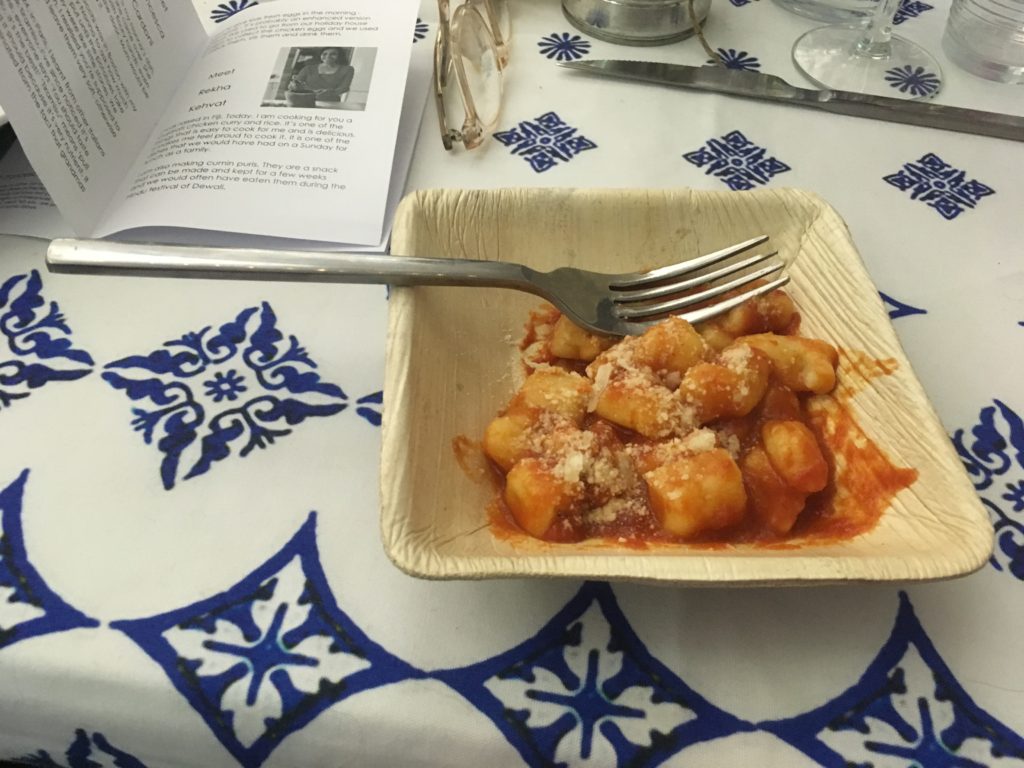
Last night’s menu? We started with Cumin Puris from Rekha from Fiji and Bakwan fritters from Indonesian Martha. Francesca from Rome provided gnocchi with tomato sauce, followed by Martha’s Babi Kecap with pork, Rekha’s Gujarati curry with chicken and Vera from Indonesia’s Urab salad with coconut. For dessert? Francesca returned with Tiramisu.

To acknowledge the cultural traditions of the cooks, the evening started with a live performance of a mask dance from Fiji, followed by Bollywood dance clips on the screen over mains, and then an Italian duo with accordion and loud, joyous whoops as part of the vocals. You can see them near the stage on the very left of the panorama below.
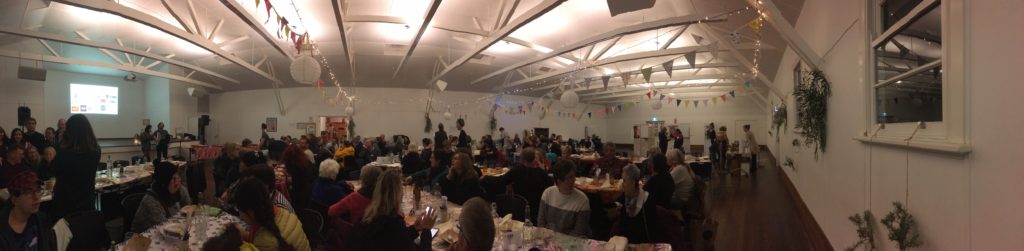
My tummy, and my cup, is full.
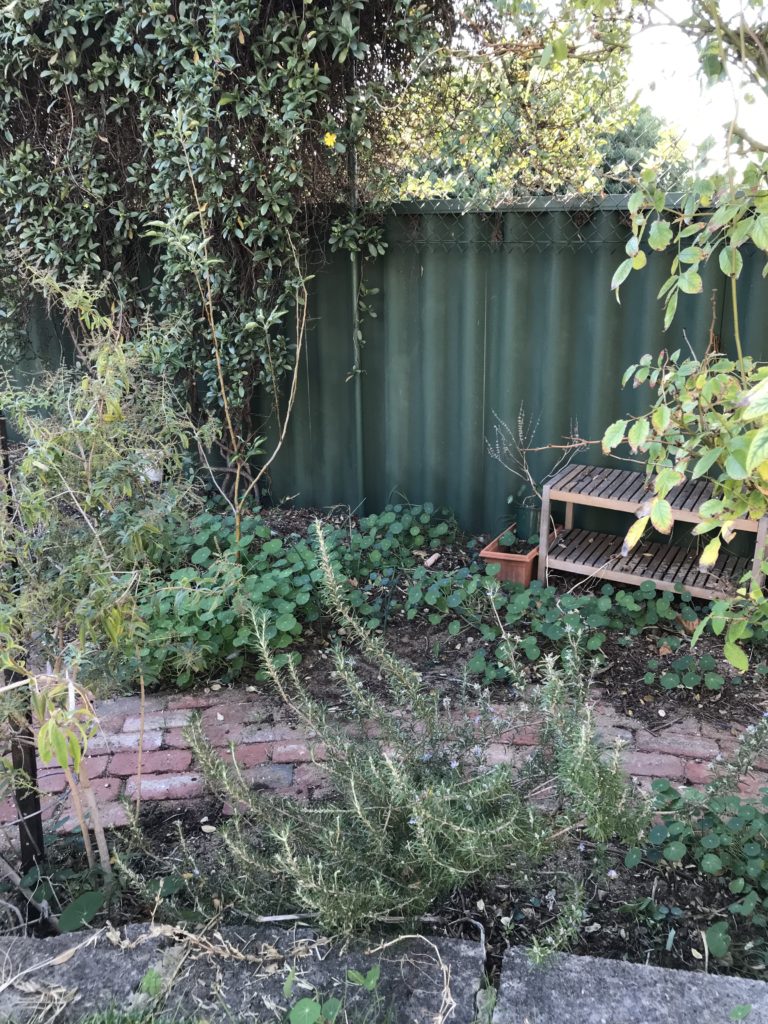

Eat my garden 9. Rosemary, lemon verbena, dwarf apple, rose, oregano, thyme, nasturtium. Blogjune 2019/20

blogjune

The rosemary in the foreground is growing where I originally planted a dwarf nectarine and a dwarf peach. They didn’t really thrive, and then the fruit-fly stung all their fruit… so they were donated to friends as part of my “thrive or don’t stay” philosophy.

Rosemary for roast potatoes, soups and omlettes. It’s the second rosemary bush I have had, replacing one that was where the apple is now, that simply grew and grew until it became woody and collapsed on itself one day.

Lemon verbena to the left of the rosemary is for tea, but it goes well with fish too (must try that). The Golden Delicious dwarf apple in the left hand side of the image is about a year old and yet to fruit. Cornflowers, oregano and thyme are planted at the base. In the right hand side of the frame you can see the leaves of the Cecile Brunner rose.

And … of course…. the nasturtiums. Three weeks ago there were none there. In a month most of the picture would be nasturtiums with hand-sized leaves.

(If you looked hard, you would see some Dutch Irises and daffodils beginning to peek up, but they are DEFINITELY not for eating).

Feedback for experts and novices. Blogjune 2019/19

Uncategorized

It’s still marking season. Every semester, around this time, I write the same thing over and over and over.

It is very, very challenging to write feedback, not knowing whether this small, seemingly innocuous, comment may be the final straw that destroys someone’s self-concept as a scholar and is catalyst for them to drop out of uni… or whether they are the type of student who did not care about trying when they did the assessment and still really does not care enough at the end of semester to even read my often carefully-considered (although too brief) feedback.

Thomas Hawke (2006). Repeat [Photo]. Retrieved from https://www.flickr.com/photos/thomashawk/2681744739/

I tend to err on the side of being very direct. I find praise sandwiches a bit patronising… maybe because I feel like I am being too obvious when I do it, and think I will come off as insincere if I try. It can be difficult, though, to be usefully direct.

Sorry about lack of referencing here, but I read a couple of years ago that experts want to be corrected, while novices want to know what they did right.

So, if you are trying to shoot a basket and are very experienced, what you want from your coach is to know how to improve, where you are going wrong, a “critical friend”. If you are just starting out, you may need confirmation that you are holding the ball right and that the way you are pushing up with your arm is the same as you have been shown. In other words, you do not have enough background to know what you are doing right. If you are an expert, you can see when you are doing right, but want hints on how to improve and stop doing wrong things.

The problem happens when the expert comes across a novice and thinks they must want the same kind of feedback that works for them… so points out all kinds of errors, leaving the novice, who is none-the-wiser about what they are actually doing right, feeling like they are doing only wrong things.

I think that this may be the biggest mismatch between markers and students when it comes to feedback.

I am experimenting this semester with listing in my comments a whole lot of possible right things that students can do for this assessment, then asterisking those bits that this student had issues with. It makes the feedback wordy, but maybe is giving them context for the bits where they can improve??

Regardless, here are three phrases that I write over and over and over and over…..

“Please synthesise and summarise.”

“Favour succinctness.”

“This source is not recent enough to support this claim about current technology.”

And one that I write too often each semester….even if it is just once or twice.

“I suspect this mark indicates more about your time management on this assessment than your academic capability. If this is not so, then please contact me and we can discuss together improvements that you could make for next time”.

Eat my garden 8. Grapes. Hibiscus. Blogjune 2019/18

blogjune

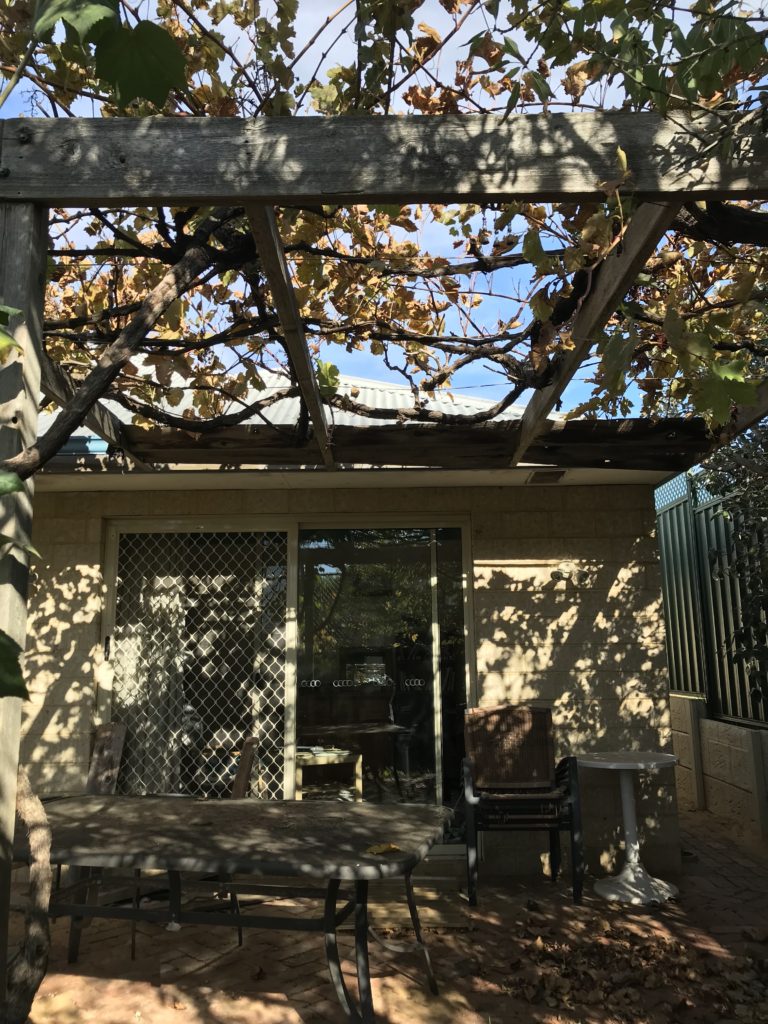
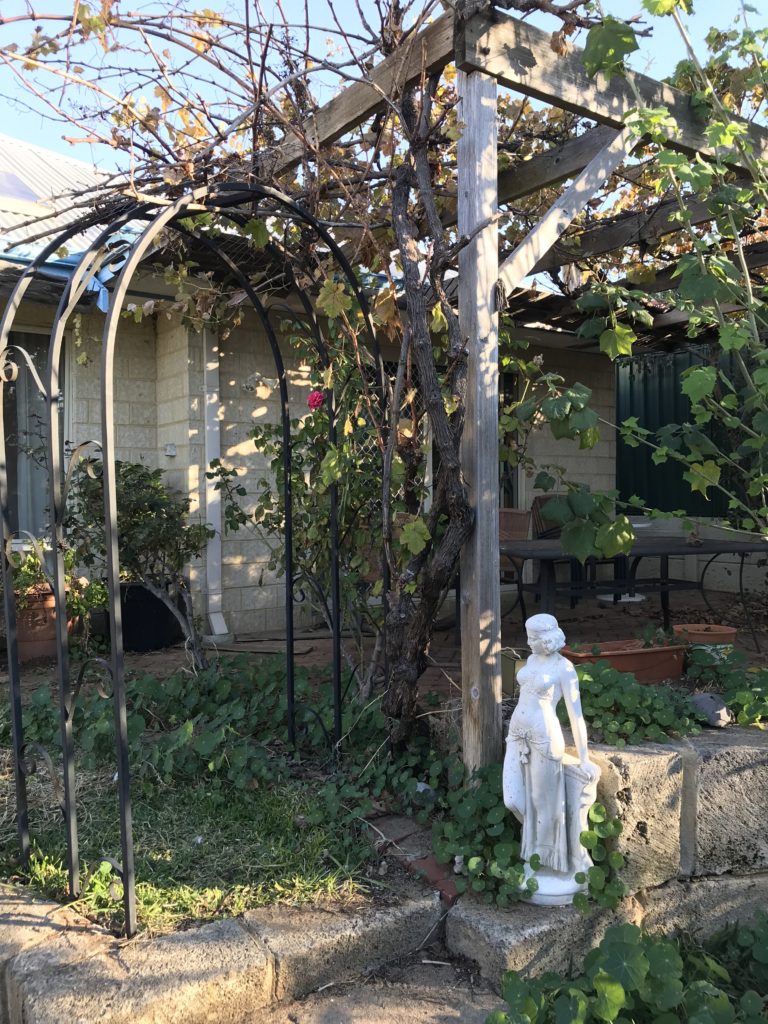
The grape pergola forms an extra green room in summer time, then lets sunshine into my office on Winter days. Grapes on top and down the sides, hibiscus to the north. Both pruned back to almost nothing in winter.

The house is built on what was the backyard of a small weatherboard cottage, and before that about 150 years ago, a diary farm. Many grape varieties were growing in the yard before it was cleared in Winter. I saved several cuttings in pots and planted them on the pergola and the perimeter of the North side of the property. I am pretty sure that I did not save all the varieties, though. I think they were probably originally brought by Italian migrants to the area, so are probably rather unusual.

Do I like to eat grapes? Nope. Do my kids? Yes … but only the seedless variety with paper-thin skins that you can buy in the supermarket.

I have so many grapes over summer that I think I could probably have a go at making my own wine one year.

The hibiscus mutabilis has flowers that open as white, then change to a deep pink. The leaves are theoretically edible, but more often used to deal with burns, like you would aloe vera. I have never thought to try eating it.

Mimicry and learning Blogjune 2019/17

Uncategorized

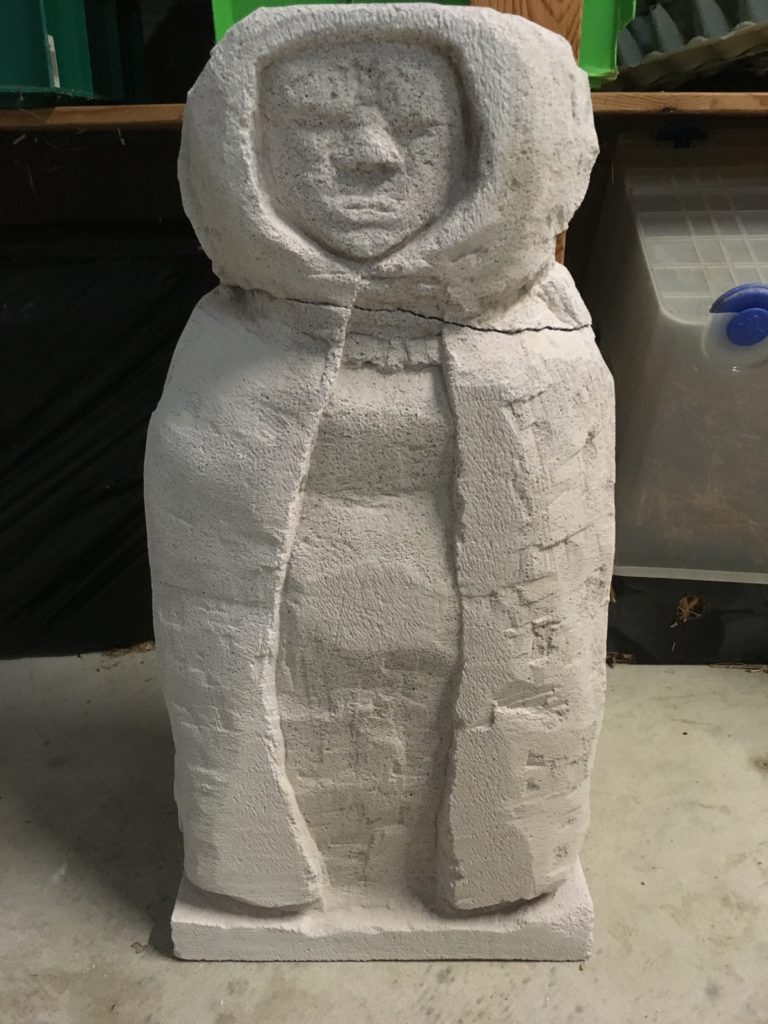
I spent all day Sunday at a stone carving workshop … carving stone. All a lot of fun until the head fell off! Due to a fault in the Hebel block, apparently, so I came home with a headless statue AND a brand new Hebel block to try again.

She doesn’t look TOO bad .. until I give you this link… I was aiming for the statue of Geertruyt van der Oosten who stands near a canal in Delft in the Netherlands. I snapped an image that I used as my screensaver for years. She is so lovely a rotund and smooth, and looks up with such optimism.

My little stone carving is not and does not.

She looks like the Nailed It! version.

I felt far better when my classmates turned out “Nailed It!” ducks and penguins and dogs too. We all laughed with each other as the stone took on a mind of its own. All of us had a great workout for the arms, and I think spent six or so hours in a “flow” state as we attempted something new.

While I was trying to copy the lines of the original from some photographs, I was reminded of the book of Degas Dancers I bought when I was learning pastel drawing. My teacher had us copy a lot of other drawings in our sessions – and for good reason. Trying to deconstruct how a drawing has been made, which colour was layered where and in which stage, how the lines fit together – teaches you to draw better than either step-by-step drawing-by-numbers or trying to just draw without a guide.

Today I was taught about stone carving by a Dutch stonemason called Arie Teeuwisse, who completed the original statue in 1358.

Unlike drawing, where you may create a couple of good guiding lines first and then use them to get your bearings for the rest of the sketch, it seems that with sculpting you need to pick out the dimensions that are the most extreme, ensure you have them right, then build from there. This is why the lovely tummy on the original Geertruyt (which to me looks maybe pregnant ?), on my version looks as though she was sliced down the front. I didn’t allow for this curve before I started on the rest.

I was chatting with a fellow-lecturer during the week, as we have been marking work. Every so often we receive work that looks kind of, sort of right, but with wobbly bits that indicate that the student probably is trying to mimic scholarly writing, rather than has spent enough time working out what constitutes scholarly writing. I really feel for them, because I suspect that when they read academic articles, they find them so impenetrable they think THIS is how one should write…one should aim to use vague sounding language, with huge run-on sentences that really seem to go nowhere near a point.

I always wonder “what did someone do to have them feel this kind of panic when they come to write?”, and “what are we still doing to scare them so much that they do not understand that scholarly writing is above all about communicating a clear message?”.

I have my postgraduate students share their writing on discussion boards, all about different topics, but giving the topic the same treatment. I think that seeing each other’s writing lets students learn from each other. They are asked to read each other’s pieces, and I hope that by doing so, they get a better idea of where they can improve, and what they are doing well.

I don’t, however, provide model answers. Unfortunately, I find that these encourage students who get by through mimicry to give me a piece of writing that is almost a blow-by-blow copy of what is in the example.

But, I am left wondering, given my experience today of learning a lot about sculpting through mimicry, how can I use the good parts of this to help my students learn ?

Eat my garden 7. Bay, parsley, cornflower, eau de cologne mint. Blogjune 2019/16

blogjune

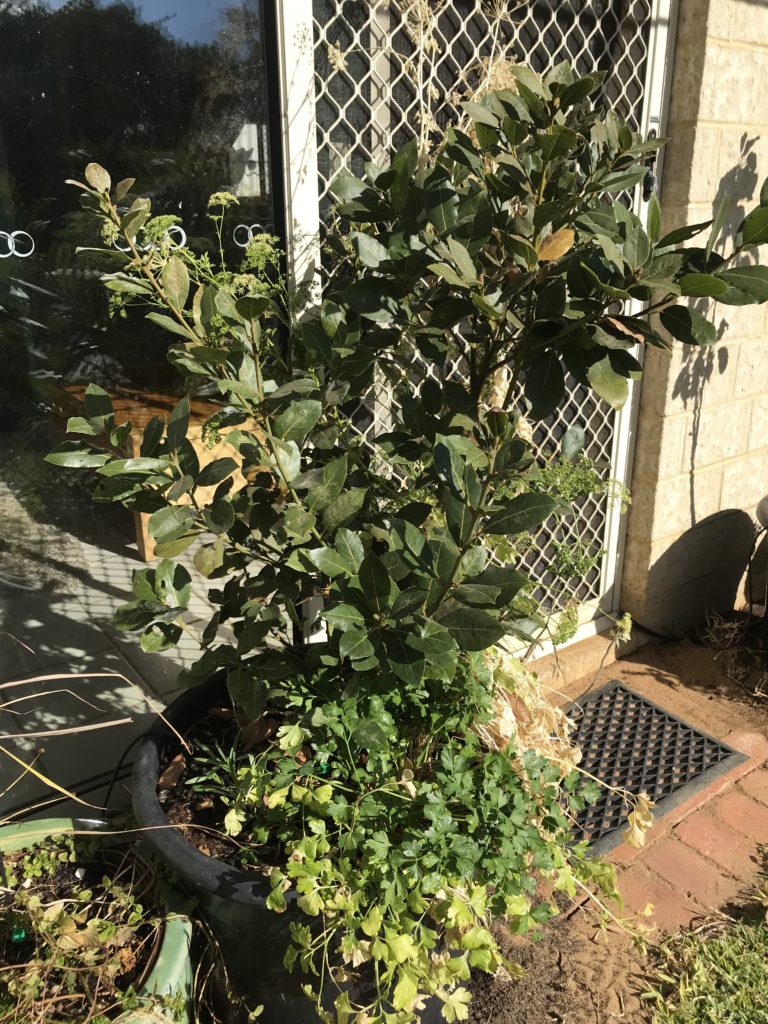
The bay tree is a “Baby Bay” variety and also kept dwarf by the pot size – otherwise it would be a full-blown laurel tree and 7 metres tall. Bay leaves for soup and stews.

The parsley is all over the yard and I let it grow wherever it chooses. In summer I grow tomatoes in the pots too. We just soak cracked wheat (bourghal) and have our own tabouli garden.

The cornflower is still a seedling at the back, but in a few weeks it will (hopefully) be around 60cm or so high with bright blue flowers. It is edible, but used more for interesting contrast in salads, rather than something you would go out of your way to pick and eat.

The green pot is growing Eu De Cologne mint, which CAN be brewed into a tea, but I prefer the peppermint and spearmint that I have growing in similar pots next to it. In baths, however, or even just crushed and rubbed on the skin, nothing can beat the fabulous fragrance. If you were a child of 1970s Australia and remember 4711 Ice Cologne …. it captures that smell very nicely.

Eat my garden 6. Olive, grapes and mandarine. Blogjune 2019/14

blogjune

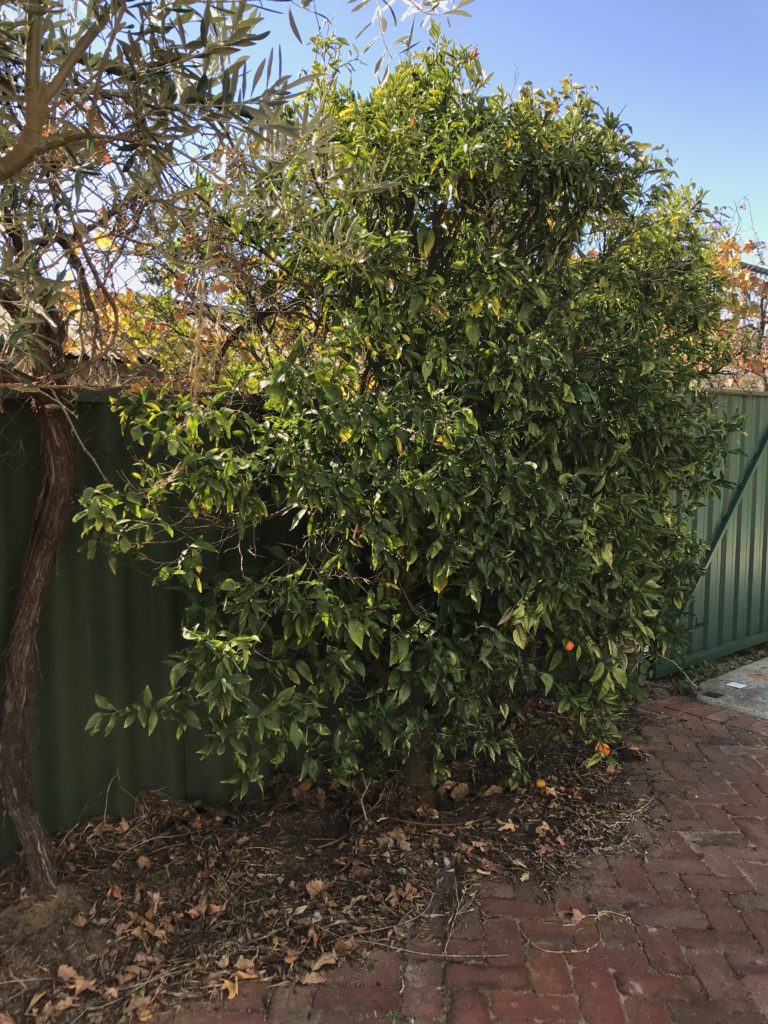
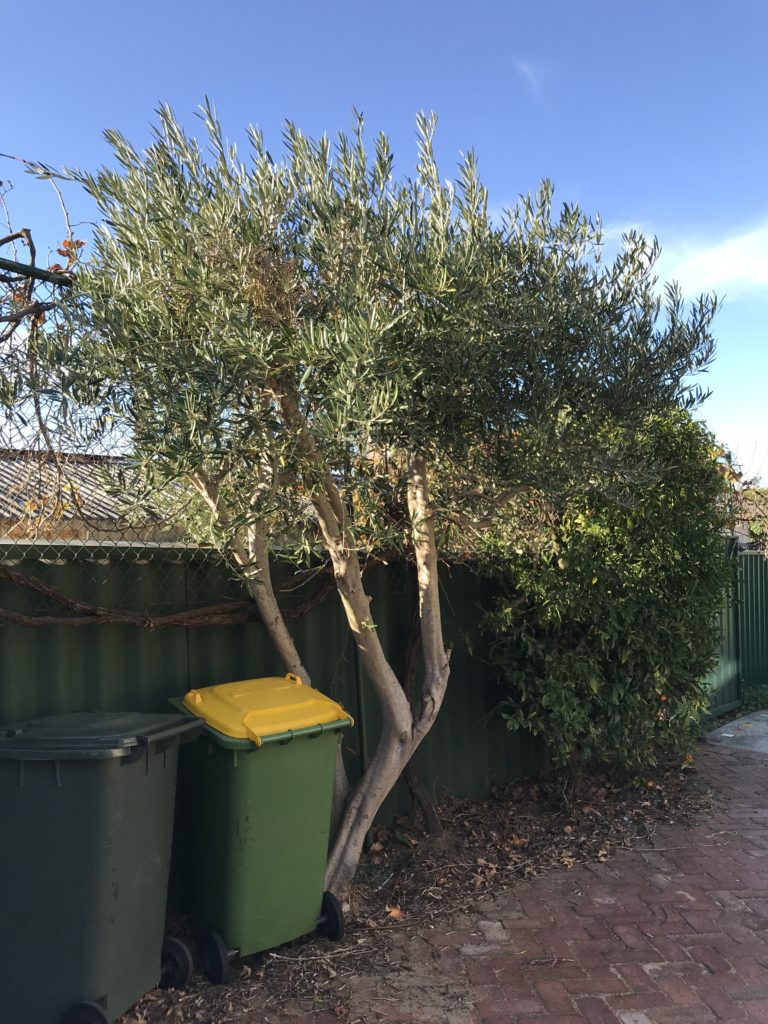
This is WHY I changed to dwarf fruit trees. The mandarine and olive provide a lovely welcome home drive, but are kept to manageable dimensions by rather frequent pruning.

It is difficult to see in the background, but behind both trees are grape vines growing on the mesh fence. The scattered leaves at the base are from the chooks foraging for bugs yesterday.

Our suburb has a community garden and a lot of olive trees in backyards. Every year we can pick the olives from our trees, take them to a central point and then they are driven up to an olive farm to crush into oil for us. We weigh the amount of olives we contribute, provide a bottle, and then receive oil in the proportion of our contribution to the press.

Kindness and UX. What do I know? Blogjune 2019/13

blogjune

…quite a bit less than I will by the time 23 August comes around…

Today I found out that I have a paper accepted for the VALA: Libraries, Technology and the Future 2020 conference, being held 11-13 February 2020 in Melbourne. The theme is “Focus on the future”.

Small curio. (2018). Kindness [Photo]. Retrieved from https://www.flickr.com/photos/smallcurio/44693257391/

The full title of my paper is “Kindness and UX in GLAM online presence: Same, same but different?”.

I plan to add together some Michael Stephens, some Mitchell Whitelaw, the governments of Scotland and New Zealand, maybe some Neilsen, a bit of empathy in public policy making, some rather scholarly and unscholarly ideas about kindness, some Carnegie Foundation UK kinder communities work, my own take on what it all means ….. and come up with a 2000-4000 word paper by August.

I understand the key definitions and can write about the context until the cows come home, but what I want to play with and get my head around is a question I will be nutting out for the next couple of years anyhow…

…”If it is not possible to mandate/enforce kindness, due to the voluntary and discretionary nature of true kindness, then is it instead possible or desirable to create an environment that grows kindness?”

Eat my garden 5. Dwarf lemon. Blogjune 2019/12

blogjune

My garden is actually very small, so about five years ago I gave up on regular species of trees and started with the dwarf varieties.

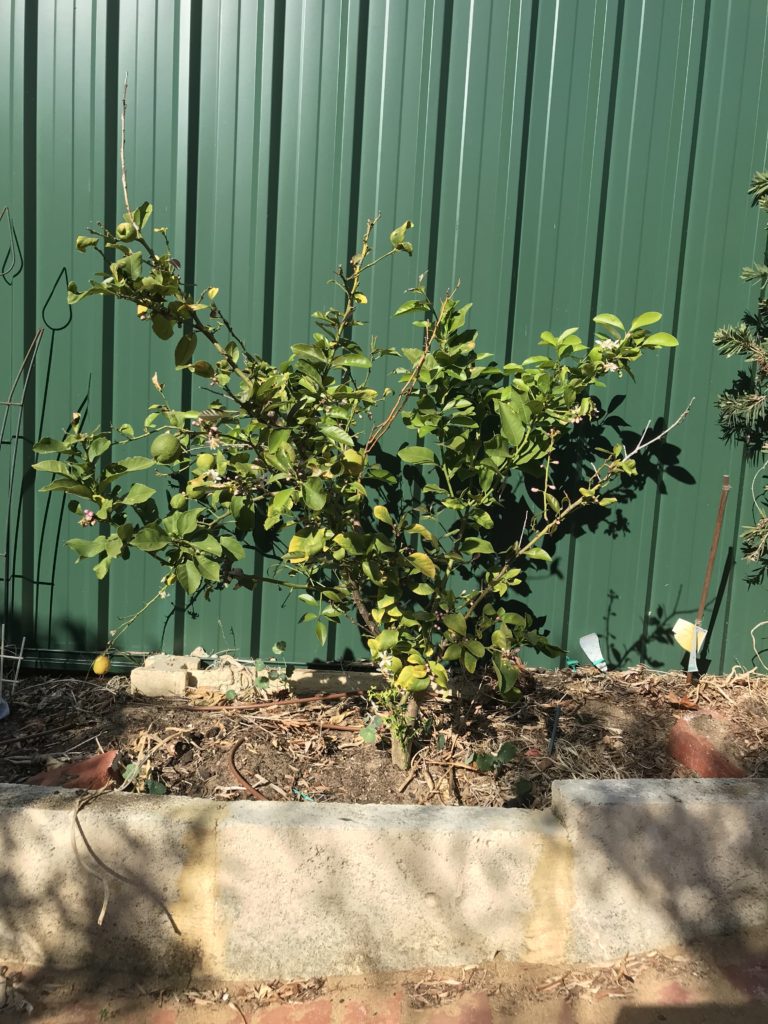
This dwarf lemon is around four years old, and treated very badly indeed. It is water-stressed over summer and has only just fruited for the first time.

My gardening philosophy is that if a is plant hardy enough to handle where it has been planted, it gets to stay. Harsh, but it means that I spend very little time cosseting my plants like they are sickly infants, and generally if something takes in the garden, it is very well suited to where it is.

(Of course, I do do a lot of handwatering and fertilizing at the very start to give it the best chance of taking… )